
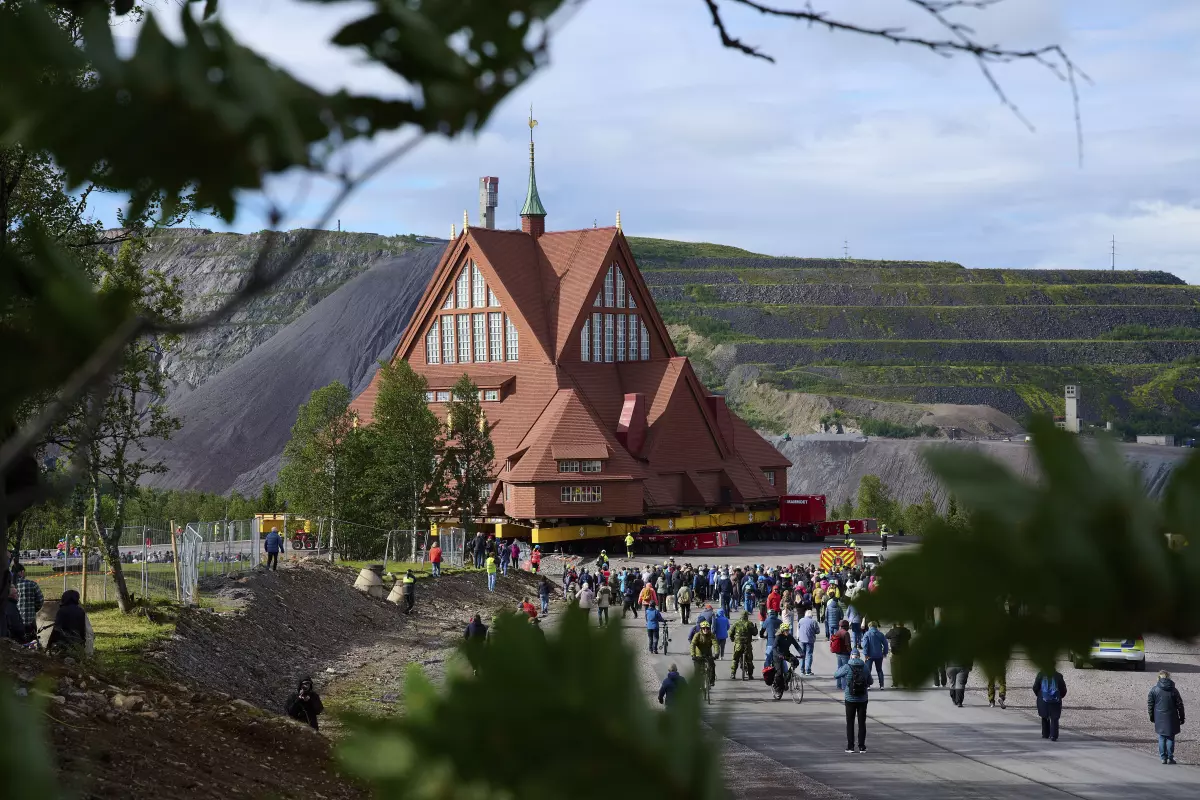
In the far north of Sweden, the landmark Kiruna Kyrka (Kiruna Church) is undergoing extensive restoration as part of one of Europe’s most ambitious urban relocation projects.
A Century-Old Landmark
Built in 1912, Kiruna Kyrka is one of the largest wooden buildings in Sweden and is often regarded as one of the country’s most beautiful churches. Designed by architect Gustaf Wickman, the church was inspired by traditional Norwegian stave churches and incorporates both Nordic and Sami cultural motifs, reflecting the region’s diverse heritage. Its striking red wooden exterior and ornate carvings have made it a cultural and spiritual symbol for the people of Kiruna.
The Relocation of Kiruna
The city of Kiruna is currently being relocated eastward due to the expansion of the iron ore mine, which has undermined the ground beneath the old town. This massive project, affecting homes, businesses, and public spaces, also involves carefully moving or restoring cultural landmarks such as the City Hall tower and Kiruna Kyrka.
Restoration and Preservation Efforts
The ongoing restoration of Kiruna Kyrka focuses on:
-
Structural reinforcement to protect the wooden framework.
-
Preservation of the intricate carvings and paintings, which blend Christian and Sami symbolism.
-
Modern upgrades to ensure the church remains a functional and welcoming community space for future generations.
Experts in wooden architecture and conservation are working closely with local authorities and the church parish to ensure authenticity in the restoration process.
A Symbol of Identity and Resilience
For many residents, Kiruna Kyrka represents more than a place of worship — it is a symbol of resilience, adaptation, and cultural preservation in the face of change. Its restoration ensures that the spirit of Kiruna’s history will continue to accompany the community into its new location, bridging past and future.