
Mount Tabor, rising prominently in the Jezreel Valley of Israel, is one of the most significant biblical mountains for Christian pilgrims. Known as the site of the Transfiguration of Jesus, this majestic peak provides not only breathtaking views but also a profound spiritual experience. For centuries, believers have climbed Mount Tabor to reflect on the revelation of Christ’s divine glory and the call to faith.
The mountain stands approximately 575 meters (1,886 feet) above sea level, dominating the surrounding landscape. Its strategic and spiritual location has made it a site of worship, devotion, and pilgrimage for thousands of years.
Biblical Significance: The Transfiguration
The New Testament recounts that Jesus took Peter, James, and John to Mount Tabor to pray (Matthew 17:1–9; Mark 9:2–8; Luke 9:28–36). There, He was transfigured before them, His face shining like the sun, and His garments dazzling white. Moses and Elijah appeared beside Him, representing the Law and the Prophets. This miraculous event revealed Jesus’ divine nature and affirmed His mission as the Messiah.
The Transfiguration also reassured the disciples of Christ’s glory before His impending suffering in Jerusalem. It remains a powerful moment in Christian theology, symbolizing the unity of God’s plan, the fulfillment of Scripture, and the promise of resurrection and eternal life.
Historical and Archaeological Background
Mount Tabor has been a site of religious significance since ancient times. Archaeological evidence shows that it was occupied by Canaanites and later became a fortress during the Roman and Byzantine periods. Early Christians recognized the mountain as the site of the Transfiguration and established worship spaces on its summit.
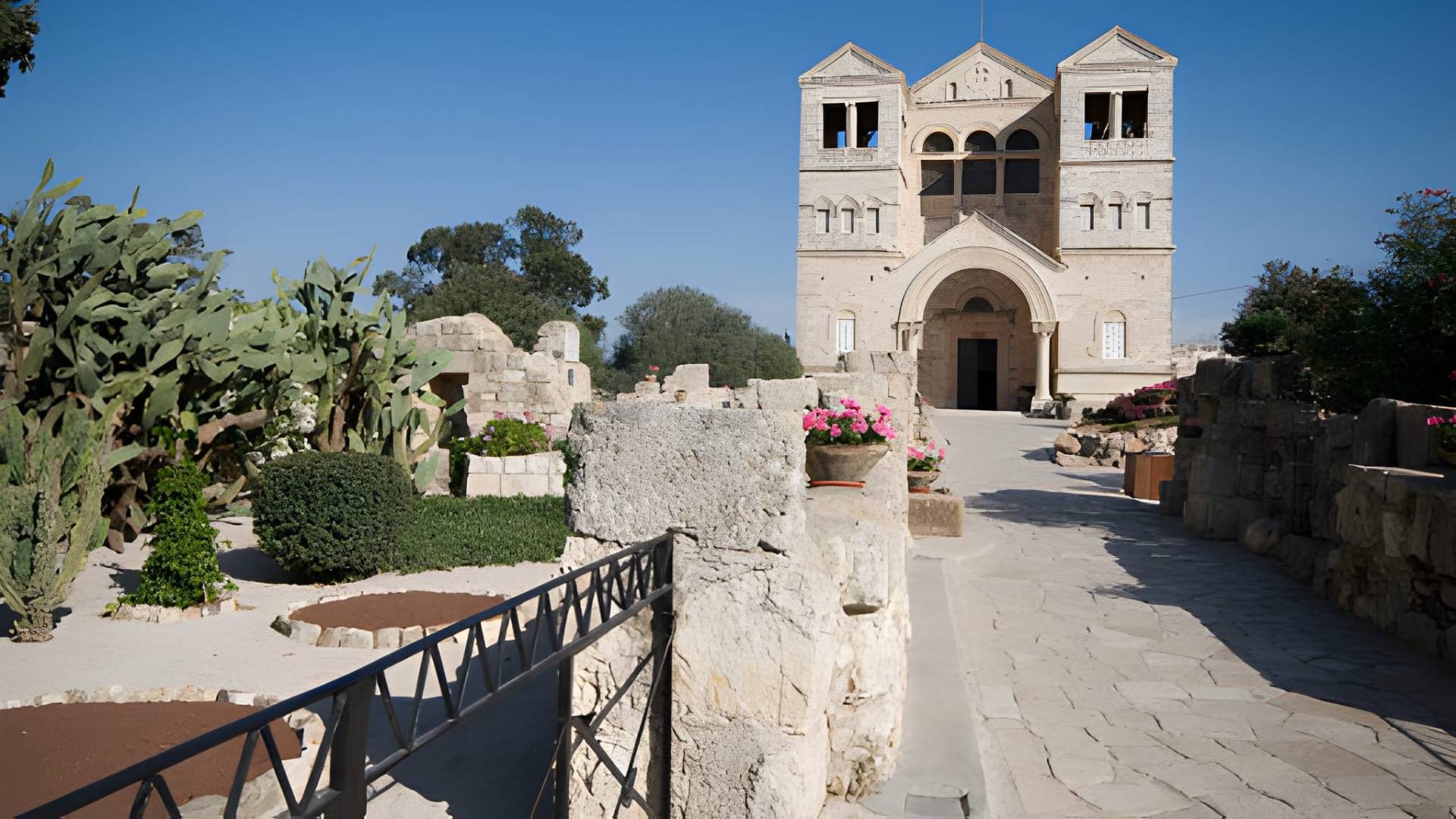
Over the centuries, the mountain was home to various churches and monasteries. The current landmark, the Basilica of the Transfiguration, was completed in the 1920s. Designed by the Italian architect Antonio Barluzzi, it is a masterpiece of modern sacred architecture that incorporates historical elements of earlier churches.
The Basilica of the Transfiguration
The Basilica of the Transfiguration crowns Mount Tabor, built over the ruins of Byzantine and Crusader churches. Its design harmoniously blends natural rock formations with sacred architecture. Inside, three chapels represent the Holy Trinity: one for God the Father, one for Jesus Christ, and one for the Holy Spirit.
Pilgrims enter the basilica through a series of steps carved into the rock, symbolizing the ascent to divine revelation. The interior is adorned with mosaics, marble floors, and stained-glass windows depicting biblical scenes. A chapel at the heart of the church marks the traditional site of the Transfiguration itself.
Spiritual Reflection on Mount Tabor
Climbing Mount Tabor is more than a physical journey; it is a spiritual ascent. Pilgrims are invited to contemplate the glory of Christ, the fulfillment of Scripture, and the promise of eternal life. The mountain serves as a metaphor for spiritual growth: ascending from the ordinary into a deeper understanding of God’s presence and plan.
The experience encourages reflection on Christ’s dual nature as fully human and fully divine, inspiring believers to trust in His guidance and follow His path. Many pilgrims describe a profound sense of awe and peace, feeling as though they have stood in the presence of divine light.
Pilgrimage Experience Today
Today, Mount Tabor remains a major destination for Christian pilgrims from around the world. Visitors often combine the visit with trips to nearby Galilean sites such as Nazareth, the Sea of Galilee, and Capernaum. The climb, though moderate, is filled with prayer, reflection, and anticipation of reaching the summit.
The panoramic view from the top offers an inspiring sight: the Jezreel Valley stretches out below, and on clear days, pilgrims can see the surrounding mountains and villages that formed the backdrop of Jesus’ ministry. This scenic vista, combined with the basilica’s sacred presence, makes Mount Tabor a unique and moving pilgrimage experience.
A Living Testament of Faith
Mount Tabor stands as a living witness to God’s glory revealed in Christ. It connects believers to one of the most profound events in the Gospel — the Transfiguration — reminding all who climb it that faith transforms ordinary life into divine encounter.
For Christian pilgrims, Mount Tabor is not only a historical landmark but a spiritual summit. It calls each believer to ascend in faith, to witness Christ’s glory, and to carry that vision of hope and salvation into daily life. The mountain remains a beacon of divine revelation, eternal promise, and the enduring power of God’s light.