
Santiago de Compostela Cathedral stands as one of the most important Christian pilgrimage destinations in the world and the sacred heart of the legendary Camino de Santiago pilgrimage route. Located in the historic city of Santiago de Compostela, this grand cathedral marks the traditional burial site of Saint James the Apostle. For over a thousand years, pilgrims have journeyed across continents to reach this sacred sanctuary, making it one of the most enduring symbols of Christian devotion, perseverance, and faith.
According to Christian tradition, Saint James traveled to the Iberian Peninsula to spread the Gospel after the resurrection of Christ. After his martyrdom in Jerusalem, his remains were believed to have been miraculously transported back to Spain. Centuries later, around the 9th century, a hermit is said to have discovered his tomb following a heavenly vision of guiding stars, giving rise to the name “Compostela,” which is often interpreted as “field of stars.” This discovery transformed the location into one of the holiest sites in Christendom.
The original shrine built over the tomb of Saint James soon developed into a major pilgrimage destination, rivaling Jerusalem and Rome in importance during the Middle Ages. As pilgrims traveled from villages, towns, and kingdoms across Europe, an extensive network of pilgrimage roads emerged. These paths collectively became known as the Camino de Santiago. Along these routes, churches, monasteries, hospitals, and shelters were built to care for travelers, creating a shared Christian culture that shaped European history and faith.
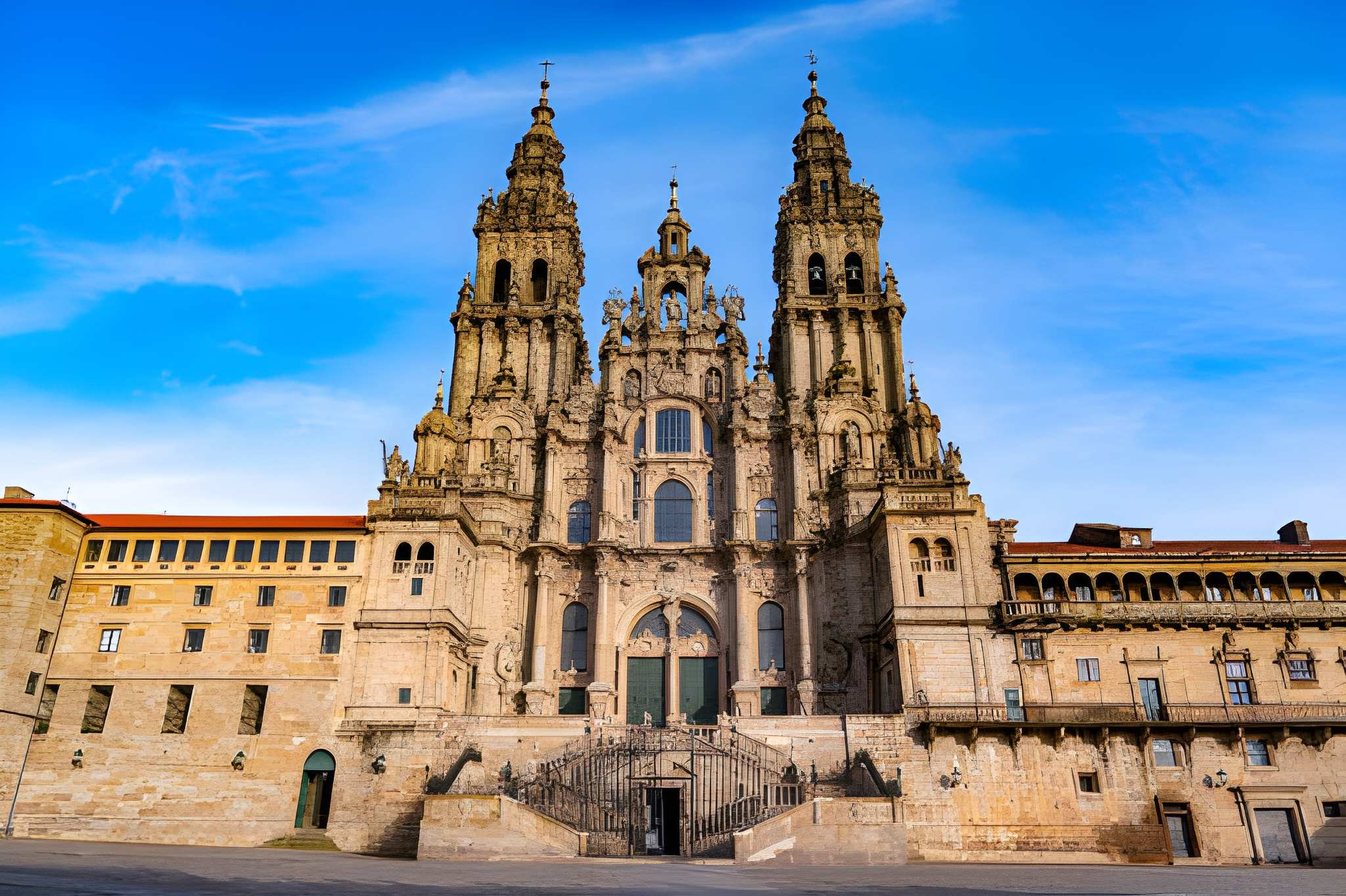
The present cathedral was constructed mainly between the 11th and 13th centuries and is considered one of the finest examples of Romanesque architecture in Europe. Over time, Gothic, Baroque, and Renaissance elements were added, creating a magnificent fusion of artistic styles. The grand western façade, known as the Obradoiro, stands as a breathtaking symbol of arrival and spiritual triumph for pilgrims who have walked hundreds of kilometers to reach this destination.
Inside Santiago de Compostela Cathedral, pilgrims encounter an atmosphere filled with reverence, emotion, and sacred history. At the heart of the cathedral lies the crypt that houses the relics of Saint James. Pilgrims descend into this sacred space to kneel in prayer, offer thanksgiving, and seek spiritual renewal. For many, this moment marks the culmination of months of walking, praying, and personal transformation.
One of the most beloved traditions within the cathedral is the embrace of the statue of Saint James located behind the main altar. Pilgrims ascend a narrow staircase to embrace the apostle’s figure as a sign of gratitude, devotion, and spiritual connection. This simple gesture has become one of the most powerful symbolic acts of the Camino experience.
Another extraordinary feature of the cathedral is the Botafumeiro, a massive silver incense burner that swings across the nave during special liturgical celebrations. Operated by a team of assistants, the Botafumeiro fills the cathedral with fragrant incense, symbolizing purification, prayer rising to heaven, and the unity of pilgrims gathered from all nations. The ritual dates back centuries and remains one of the most visually powerful expressions of worship in the Christian world.
Santiago de Compostela Cathedral is not only a destination for religious devotion but also a place of deep cultural and historical significance. Throughout the medieval period, the Camino pilgrimage played a crucial role in shaping European identity. Pilgrims from different languages, cultures, and regions walked the same road, shared the same hardships, and prayed at the same altar. This shared experience laid the foundations for a united Christian Europe and fostered a spirit of cooperation and hospitality that continues today.
In modern times, the Camino de Santiago has experienced a powerful revival. Pilgrims now walk the route not only for strictly religious reasons but also for spiritual searching, healing, reflection, and personal transformation. Yet regardless of their motivation, the final destination remains the same—Santiago de Compostela Cathedral. Reaching the cathedral after weeks of walking is often described as an unforgettable emotional and spiritual moment, filled with tears, joy, gratitude, and renewal.
The cathedral also plays a living role in the daily worship life of the Church. Daily Masses, feast celebrations of Saint James, and international liturgical gatherings continue to draw faithful from around the world. July 25th, the feast day of Saint James, is celebrated with great solemnity and joy, bringing together thousands of pilgrims in one of the most important Christian celebrations in Spain.
Santiago de Compostela Cathedral stands as a bridge between heaven and earth, history and living faith. It reflects the journey of the human soul seeking meaning, direction, and divine encounter. The long walk of the Camino teaches patience, humility, endurance, and trust in God’s guidance, while the cathedral itself offers the sacred reward of arrival into God’s presence.
In conclusion, Santiago de Compostela Cathedral remains one of the most powerful symbols of Christian pilgrimage in the world. As the final destination of the Camino de Santiago and the resting place of Saint James the Apostle, it continues to inspire faith, hope, and spiritual transformation in millions of pilgrims across generations. Its sacred walls echo with the prayers of centuries and stand as a living testimony to the unbreakable bond between journey, faith, and divine purpose.