
The Lalibela Churches stand among the most extraordinary Christian pilgrimage sites in the world, representing a remarkable fusion of faith, architecture, and spiritual devotion. Located in the historic town of Lalibela in northern Ethiopia, this complex of rock-hewn churches continues to serve as a living center of worship and pilgrimage for Ethiopian Orthodox Christians and believers from across the globe.
Carved entirely from solid volcanic rock during the late 12th and early 13th centuries, the Lalibela Churches were created under the reign of King Lalibela, a ruler of the Zagwe dynasty. According to tradition, the king envisioned constructing a “New Jerusalem” after pilgrimages to the Holy Land became difficult due to conflict. His vision resulted in one of the most ambitious religious architectural achievements in Christian history.
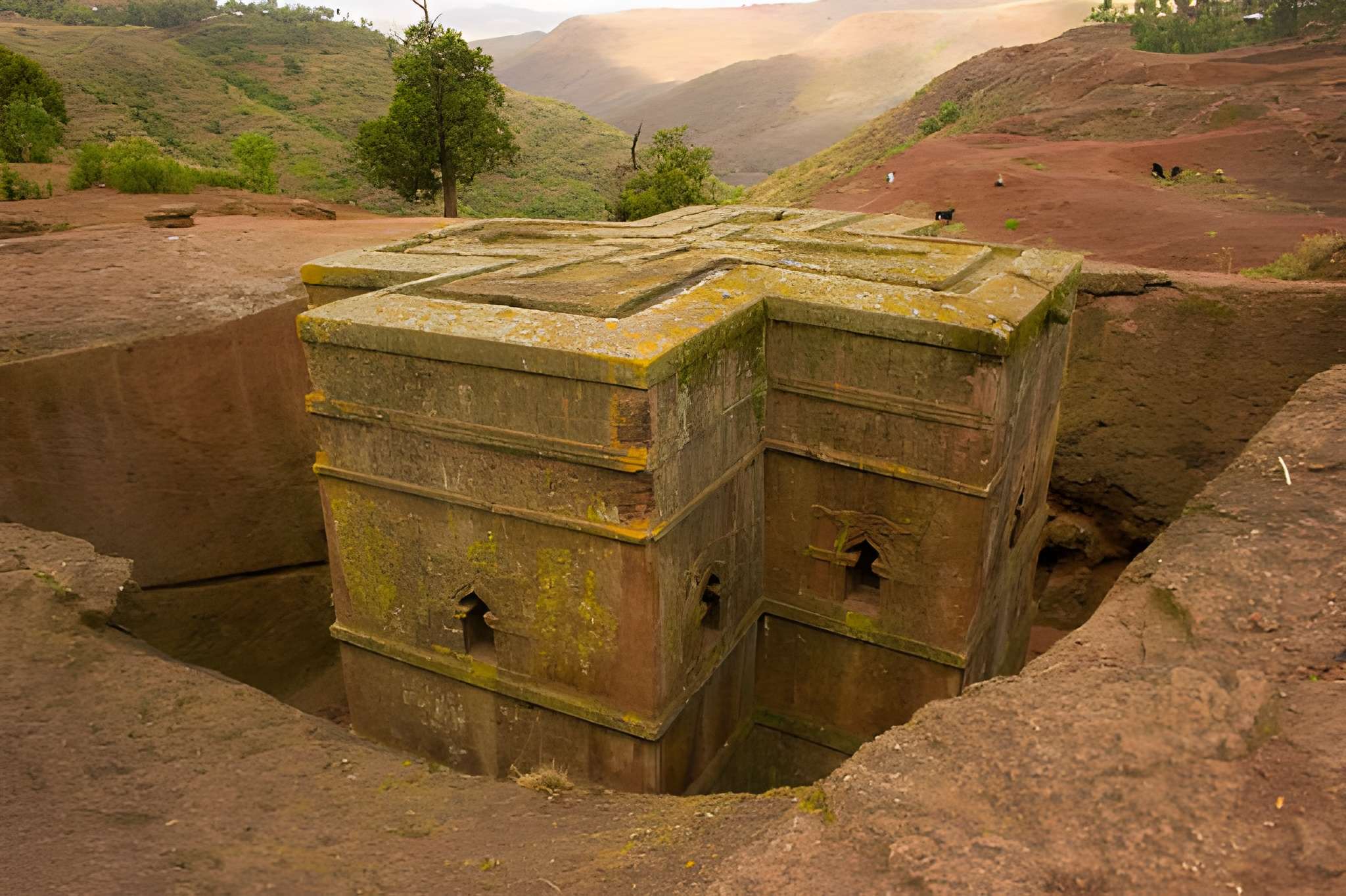
The Lalibela complex consists of eleven monolithic churches, each carved downward into the earth rather than built upward. These sacred structures are interconnected by tunnels, trenches, and passageways, symbolizing the spiritual journey of faith and the interconnectedness of Christian life. Every detail reflects deep theological meaning, from the layout of the churches to the biblical symbolism embedded in their design.
Among the most famous is the Church of Saint George, often considered the crown jewel of Lalibela. This cross-shaped church is carved entirely below ground level and stands as a powerful symbol of sacrifice, humility, and devotion. Its precise geometry and spiritual symbolism continue to amaze scholars, architects, and pilgrims alike.
The Lalibela Churches are not merely historical monuments; they are active places of worship. Daily prayers, liturgies, and religious rituals are conducted by Ethiopian Orthodox clergy dressed in traditional robes. The sound of ancient chants, prayer drums, and incense fills the air, creating a spiritual atmosphere that has remained unchanged for centuries.
Pilgrimage to Lalibela is a central aspect of Ethiopian Christian life. Thousands of pilgrims travel on foot from distant regions, especially during major religious festivals such as Christmas (Genna) and Epiphany (Timkat). These pilgrimages are acts of faith, repentance, and devotion, reflecting a deeply rooted spiritual tradition passed down through generations.
The churches are divided into two main groups, often interpreted symbolically as representing earthly Jerusalem and heavenly Jerusalem. Sacred names such as the River Jordan, Mount of Olives, and Golgotha are used throughout the complex, reinforcing the connection between Lalibela and biblical geography. This symbolic landscape allows pilgrims to spiritually experience the Holy Land within Ethiopia itself.
The construction of the Lalibela Churches remains a mystery and a testament to extraordinary craftsmanship. Using simple tools, builders carved massive structures from solid stone with remarkable precision. Walls, ceilings, windows, and columns were shaped directly from the rock, demonstrating both technical mastery and profound faith. Many believe that divine guidance played a role in completing such an ambitious project.
Beyond architecture, the Lalibela Churches preserve priceless religious treasures, including illuminated manuscripts, ancient crosses, liturgical objects, and sacred icons. These artifacts reflect the rich spiritual and artistic heritage of Ethiopian Christianity, one of the oldest continuous Christian traditions in the world.
The churches have endured centuries of environmental challenges, political change, and the passage of time. Preservation efforts continue to protect this sacred heritage while maintaining its active religious role. The balance between conservation and worship underscores the living nature of Lalibela as both a holy city and a cultural treasure.
For modern visitors and pilgrims, a journey to the Lalibela Churches is often described as a deeply transformative experience. The physical descent into the rock-hewn sanctuaries mirrors an inward spiritual journey, inviting reflection, humility, and renewed faith. Many pilgrims leave with a profound sense of connection to early Christianity and a renewed commitment to spiritual life.
The Lalibela Churches are recognized globally as a masterpiece of human creativity and religious devotion. Yet for the faithful, their true significance lies not in architectural wonder alone but in their enduring role as a place where prayer, faith, and community continue to thrive.
In conclusion, the Lalibela Churches stand as a powerful testament to Christian faith expressed through stone, prayer, and pilgrimage. As a sacred center of worship and spiritual heritage, they remind the world that faith can shape landscapes, inspire generations, and endure through centuries. Lalibela remains a living sanctuary where ancient devotion continues to guide modern believers on their spiritual journey.