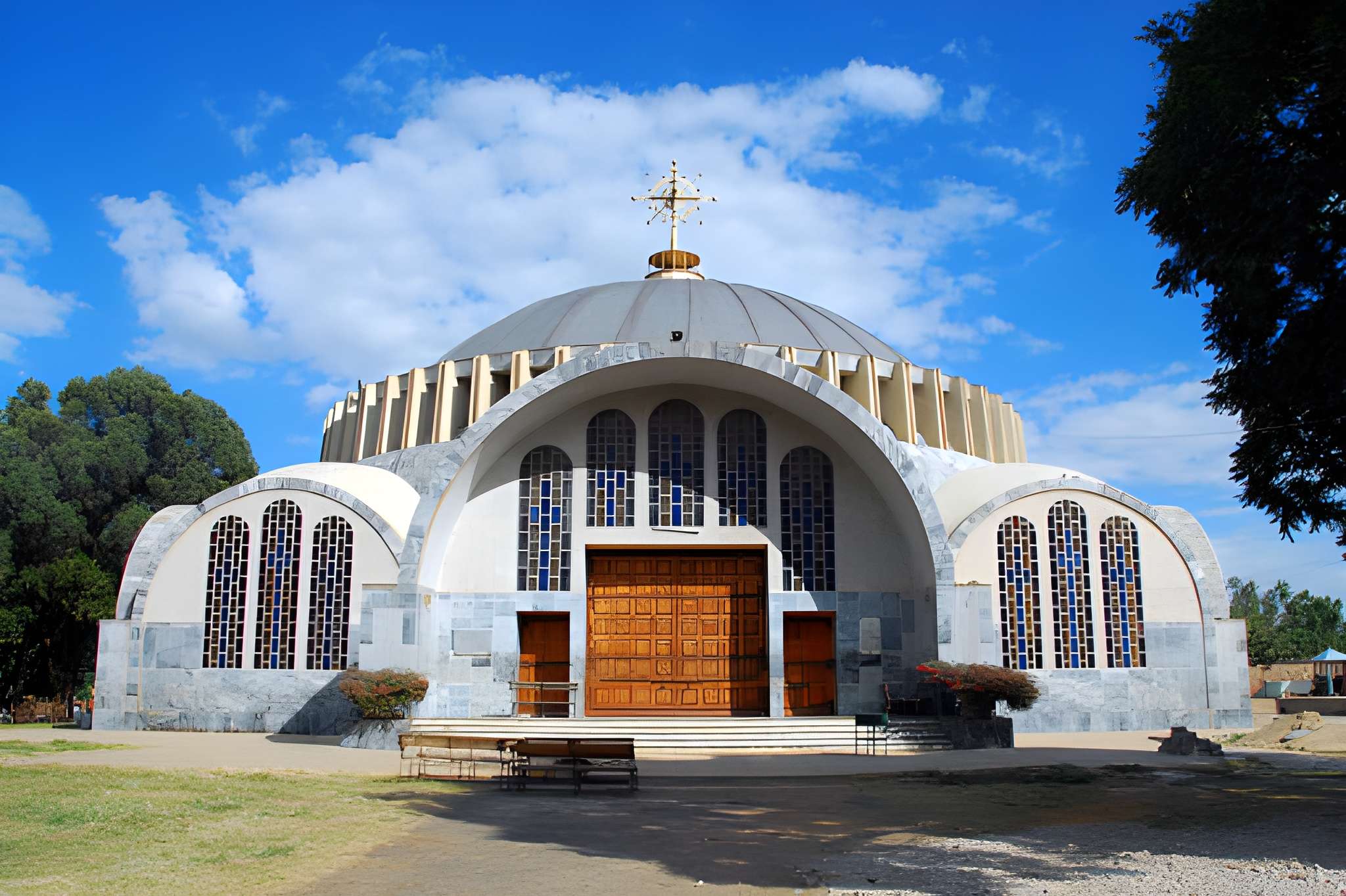
The Church of St. Mary of Zion stands as one of the most sacred and revered Christian sites in Africa, holding a unique place in the spiritual life of Ethiopian Christianity. Located in the ancient city of Axum in northern Ethiopia, this holy church is deeply rooted in centuries of faith, tradition, and pilgrimage. For Ethiopian Orthodox believers, it represents not only a place of worship but also the spiritual heart of the nation.
According to ancient Ethiopian tradition, the Church of St. Mary of Zion is intimately connected to one of the most mysterious and sacred objects in biblical history: the Ark of the Covenant. Ethiopian belief holds that the Ark was brought to Axum by Menelik I, the son of King Solomon and the Queen of Sheba. While access to the Ark is restricted and entrusted to a single guardian monk, this belief has elevated the church to a position of unparalleled spiritual significance.
The origins of Christianity in Ethiopia trace back to the early centuries of the Christian era, making it one of the oldest Christian nations in the world. Axum itself was once the capital of the powerful Aksumite Empire, a major center of trade, culture, and religion. The Church of St. Mary of Zion is believed to have been first constructed during the reign of King Ezana in the 4th century, following his conversion to Christianity. This moment marked a defining chapter in Ethiopian religious history.
Over the centuries, the church experienced destruction and reconstruction due to invasions and political upheavals. Despite these challenges, the sacred site endured and continued to attract pilgrims from across Ethiopia and beyond. The current complex includes both an ancient church and a newer cathedral built in the 20th century, reflecting continuity between ancient faith and modern devotion.
Architecturally, the Church of St. Mary of Zion reflects traditional Ethiopian Orthodox design, characterized by stone construction, arched entrances, and sacred inner sanctuaries. The church interior is adorned with icons, crosses, and religious art depicting biblical scenes and saints revered in Ethiopian tradition. These visual elements serve as teaching tools and sources of spiritual inspiration for worshippers.
Pilgrimage to the Church of St. Mary of Zion is a central expression of Ethiopian Christian devotion. Thousands of believers travel to Axum annually, particularly during the Feast of Mary of Zion, which is one of the most important religious celebrations in the Ethiopian Orthodox calendar. Pilgrims often arrive after long journeys on foot, viewing the pilgrimage as an act of humility, repentance, and faith.
The spiritual atmosphere surrounding the church is marked by prayer, fasting, chanting, and communal worship. Ethiopian Orthodox clergy perform ancient liturgies in the Ge’ez language, preserving traditions that date back more than a millennium. The rhythmic chants and ceremonial processions create a sense of continuity with the earliest expressions of Christian worship.
Beyond its religious significance, the Church of St. Mary of Zion serves as a symbol of Ethiopian identity and spiritual resilience. It represents the enduring bond between faith and culture, reminding believers of their spiritual heritage and divine calling. The church also plays a role in preserving religious manuscripts, sacred objects, and oral traditions passed down through generations.
For many pilgrims, visiting the Church of St. Mary of Zion is a life-changing spiritual experience. Standing within the sacred grounds evokes a deep sense of reverence and connection to biblical history. The belief that the Ark of the Covenant rests nearby intensifies this experience, encouraging reflection on obedience, covenant, and God’s presence among His people.
The church’s influence extends beyond Ethiopia, drawing interest from scholars, historians, and pilgrims worldwide. It stands as a testament to the global reach of Christianity and the diverse ways faith has been expressed across cultures and continents. Despite modern challenges, the Church of St. Mary of Zion remains a living sanctuary of worship and devotion.
In conclusion, the Church of St. Mary of Zion is far more than an ancient building. It is a sacred center of faith, pilgrimage, and spiritual identity for millions of believers. Rooted in early Christianity and sustained by centuries of devotion, the church continues to inspire pilgrims with its message of faithfulness, reverence, and divine presence. As a cornerstone of Ethiopian Christian heritage, it remains a powerful symbol of living faith that transcends time.