

Introduction
Christian pilgrimage has played a crucial role in the faith journey of believers for centuries. It serves as a means to deepen one’s faith, seek spiritual renewal, and connect with the historical roots of Christianity. This sacred journey allows Christians to visit holy sites associated with Jesus Christ, the apostles, and other significant biblical events. In this article, we will explore the significance of Christian pilgrimage, its benefits, and the most revered pilgrimage destinations.
The Spiritual Significance of Pilgrimage
Pilgrimage is not just a physical journey; it is a spiritual quest that enables Christians to grow closer to God. Many believers embark on this journey to seek divine guidance, pray for healing, or express gratitude for blessings received. The act of traveling to sacred places fosters a deeper connection with God and strengthens one’s faith.
In Christianity, pilgrimage symbolizes a believer’s journey toward spiritual enlightenment and salvation. Just as the Israelites wandered in the wilderness before reaching the Promised Land, Christians see pilgrimage as a representation of their path toward eternal life.
Benefits of Christian Pilgrimage
- Spiritual Renewal – Pilgrimage provides an opportunity to disconnect from daily distractions and focus entirely on faith. This often leads to a revitalized spiritual life.
- Historical and Biblical Connection – Visiting places where Jesus and his disciples walked makes the Bible come alive, offering deeper insights into scripture.
- Communal Experience – Pilgrimages bring together believers from different backgrounds, fostering a sense of unity and shared faith.
- Healing and Miracles – Many sacred sites are believed to be places of divine intervention where miracles and healing occur.
- Personal Reflection and Prayer – The solitude and reverence of these journeys allow pilgrims to reflect on their lives, seek forgiveness, and make important spiritual commitments.
Famous Christian Pilgrimage Sites
1. Jerusalem, Israel
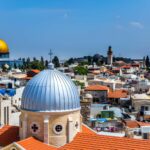
Jerusalem is one of the holiest cities in Christianity. Pilgrims visit the Church of the Holy Sepulchre, believed to be the site of Jesus’ crucifixion, burial, and resurrection. The Via Dolorosa, the path Jesus walked on the way to his crucifixion, is another significant site that draws millions of visitors annually.
2. Bethlehem, Israel
Bethlehem, the birthplace of Jesus, is home to the Church of the Nativity. This site holds immense religious significance as the location where the Savior of Christianity was born.
3. Rome, Italy
Rome is a major pilgrimage destination, especially for Catholics. The Vatican City houses St. Peter’s Basilica, the final resting place of Saint Peter, one of Jesus’ apostles. Pilgrims also visit the Sistine Chapel and the Vatican Museums.
4. Santiago de Compostela, Spain
The Camino de Santiago, or the Way of St. James, is a famous pilgrimage route leading to the Santiago de Compostela Cathedral, where the remains of Saint James the Apostle are believed to be buried.
5. Lourdes, France
Lourdes is renowned for its healing waters and the Marian apparitions reported by Saint Bernadette in 1858. Millions of pilgrims visit the Sanctuary of Our Lady of Lourdes annually, seeking spiritual and physical healing.
6. Fatima, Portugal
Fatima is a significant pilgrimage site due to the reported apparitions of the Virgin Mary in 1917. The Sanctuary of Our Lady of Fatima attracts millions of visitors yearly who come to pray and seek miracles.
Conclusion
Christian pilgrimage is a profound spiritual journey that allows believers to strengthen their faith, seek divine intervention, and experience the sacred history of their religion firsthand. Whether visiting Jerusalem, Rome, or other holy sites, the experience is often transformative, leaving a lasting impact on one’s spiritual life. For those seeking a deeper connection with God and their Christian heritage, embarking on a pilgrimage can be one of the most fulfilling experiences of their faith journey.