The Church of the Nativity in Bethlehem stands as one of the most sacred and historically significant sites in Christianity. It marks the very place where Jesus Christ was born, the moment when divine light entered the world through humble beginnings. For nearly two thousand years, pilgrims from every nation have journeyed to this holy sanctuary to kneel before the manger that witnessed the miracle of the Incarnation.
Located in the West Bank, just a few miles south of Jerusalem, the Church of the Nativity is not only a place of worship but a living testament to the faith and devotion that has endured through centuries of history, conflict, and renewal. It is recognized as a UNESCO World Heritage Site, symbolizing peace, faith, and the unbroken continuity of Christian tradition.
A Journey Through History
The origins of the Church of the Nativity trace back to the 4th century. In 327 AD, Emperor Constantine the Great and his mother Saint Helena commissioned the construction of the church over the site traditionally believed to be the birthplace of Jesus. The site was identified based on early Christian oral tradition and local reverence that had preserved the memory of this sacred cave since the earliest days of the Church.
The original basilica was destroyed during the Samaritan revolts in the 6th century, but it was rebuilt under Emperor Justinian in 565 AD. Remarkably, this reconstruction still stands today, making the Church of the Nativity one of the oldest continuously operating churches in the world.
Throughout its long history, the church has survived invasions, earthquakes, and political upheaval. Even during periods of conflict, the sanctity of the site was respected. According to tradition, when Persian invaders reached Bethlehem in 614 AD, they spared the church after recognizing a mosaic depicting the Magi in Persian attire.
The Grotto of the Nativity: The Holiest Place on Earth
At the heart of the church lies the Grotto of the Nativity, a small cave beneath the main altar. It is here, according to Christian belief, that the Virgin Mary gave birth to Jesus Christ. A silver fourteen-pointed star embedded in the marble floor marks the exact spot of His birth, bearing the Latin inscription: “Hic de Virgine Maria Jesus Christus natus est” — “Here Jesus Christ was born of the Virgin Mary.”
Pilgrims from around the world enter the grotto in quiet reverence, kneeling to touch the star or pray beside it. The atmosphere is filled with awe and deep emotion — a powerful reminder that God chose to enter human history in the simplest and most humble of settings.
Adjacent to the grotto is the Manger Chapel, traditionally believed to be the place where Mary laid the newborn Christ in the manger. The Chapel of the Magi commemorates the arrival of the Wise Men, who came bearing gifts of gold, frankincense, and myrrh — symbols of kingship, divinity, and sacrifice.
Architecture and Sacred Beauty
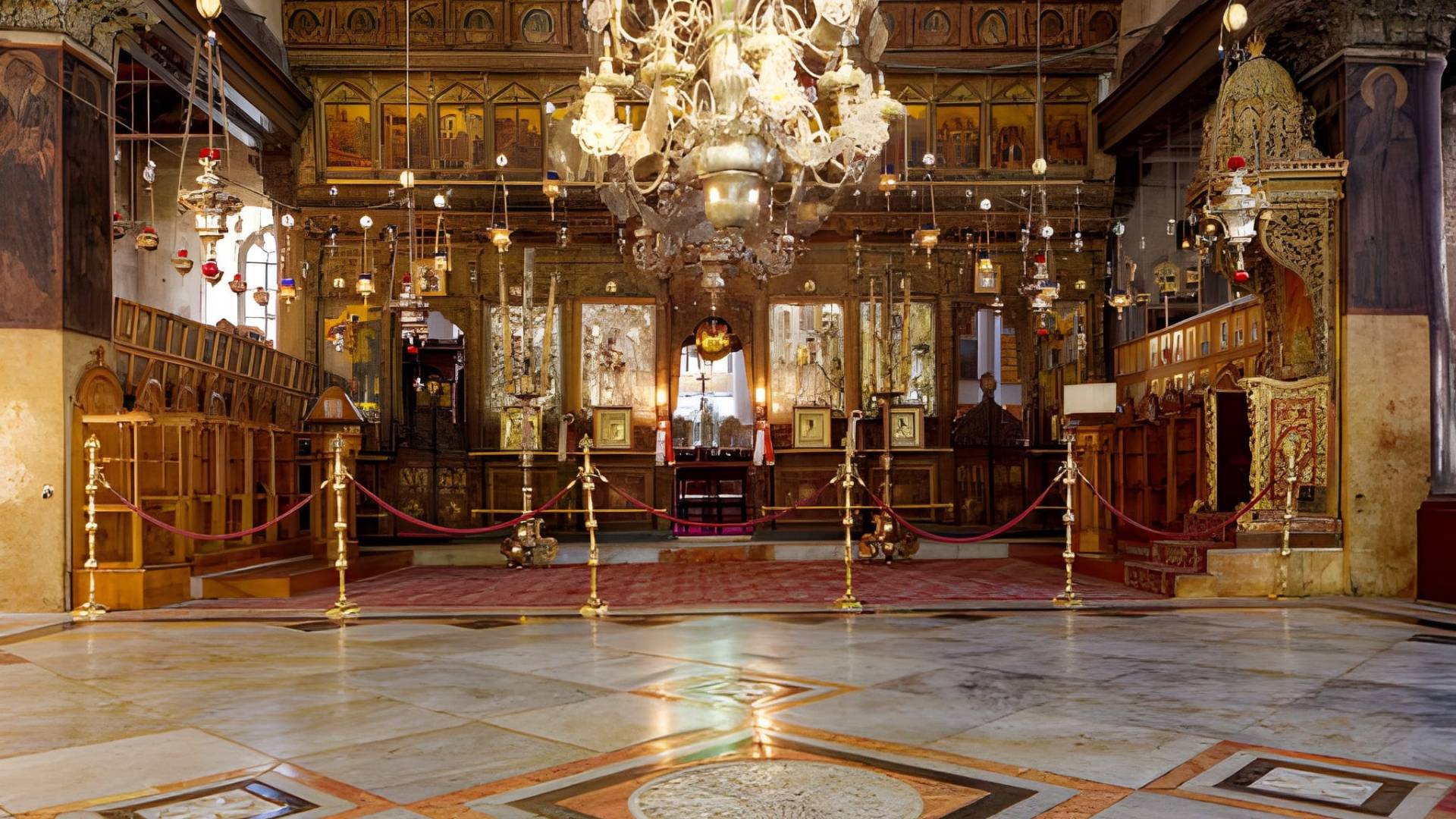
The Church of the Nativity is a masterpiece of ancient Christian architecture. Its design blends Roman, Byzantine, and Crusader influences. The basilica features a long nave supported by Corinthian columns, many of which are adorned with faint mosaics depicting saints and angels.
The wooden roof and the mosaic floors, preserved from the Byzantine period, testify to the church’s artistic and historical richness. Candles flicker along the aisles, and the air is filled with the sound of prayers in multiple languages — a reflection of the church’s universal significance to Christians of all denominations.
The site today is shared by three major Christian traditions: the Greek Orthodox, Armenian Apostolic, and Roman Catholic Churches. Each maintains a portion of the church and celebrates services according to their liturgical customs, offering visitors a living image of the global unity of Christian faith.
Spiritual Meaning of the Birthplace of Christ
The Church of the Nativity is far more than a historical monument — it is the cradle of faith. It reminds believers that God’s greatest gift came not in power or wealth, but in humility and love. The message of Bethlehem is timeless: that hope is born in simplicity, and that divine light shines brightest in darkness.
For pilgrims, standing in the Grotto of the Nativity is an encounter with the mystery of the Incarnation — the Word made flesh. It is a place where heaven touched earth, where eternal love entered human form. Many visitors describe the experience as profoundly transformative, rekindling their sense of wonder and devotion.
Pilgrimage to Bethlehem Today
Each year, millions of Christian pilgrims visit Bethlehem, especially during Christmas, when the city becomes a living celebration of Christ’s birth. Midnight Mass is held in the adjoining St. Catherine’s Church, and processions fill the streets with joy, song, and prayer.
Modern Bethlehem, though bustling and contemporary, retains its ancient soul. The journey to the Church of the Nativity connects believers not only to biblical history but also to the living Christian community that has preserved its faith here for centuries.
A Beacon of Faith and Peace
The Church of the Nativity stands as a universal symbol of peace and reconciliation. It calls the world to remember that God entered history not to conquer but to love — not to judge, but to redeem. In the quiet of the grotto, amid flickering candles and whispered prayers, the message of Christmas continues to shine: “Glory to God in the highest, and on earth peace to men of good will.”
To visit Bethlehem is to step into the heart of the Christian story — to witness the birthplace of faith, the cradle of divine love, and the eternal promise that light has come into the world.