
The Garden of Gethsemane is one of the most sacred and emotionally powerful sites in Christianity. Nestled at the foot of the Mount of Olives in Jerusalem, this ancient olive grove is the place where Jesus prayed in deep anguish the night before His crucifixion. The name Gethsemane means “oil press,” a fitting symbol for the spiritual and emotional pressure Jesus endured as He prepared to fulfill God’s will.
For centuries, pilgrims from around the world have come to the Garden of Gethsemane to reflect, pray, and connect with the moment when Christ’s humanity and divinity met in one of the most profound scenes in the Gospels. This sacred space invites every believer to enter into the mystery of obedience, surrender, and divine love.
A Place of Deep Suffering and Prayer
According to the Gospels, after the Last Supper, Jesus and His disciples crossed the Kidron Valley and entered the Garden of Gethsemane. There, He withdrew to pray, saying, “My soul is overwhelmed with sorrow to the point of death” (Matthew 26:38). In His prayer, “Father, if You are willing, take this cup from Me; yet not My will, but Yours be done,” Jesus expressed both His human fear and perfect obedience to the Father’s plan.
This moment of prayer, agony, and submission marks a turning point in salvation history. It shows Jesus’ complete surrender to God’s will—a lesson of courage and faith for all who struggle with life’s trials. The Gospel of Luke tells us that His sweat fell like drops of blood, symbolizing the weight of the world’s sins that He carried even before the cross.
Ancient Olive Trees: Living Witnesses of History
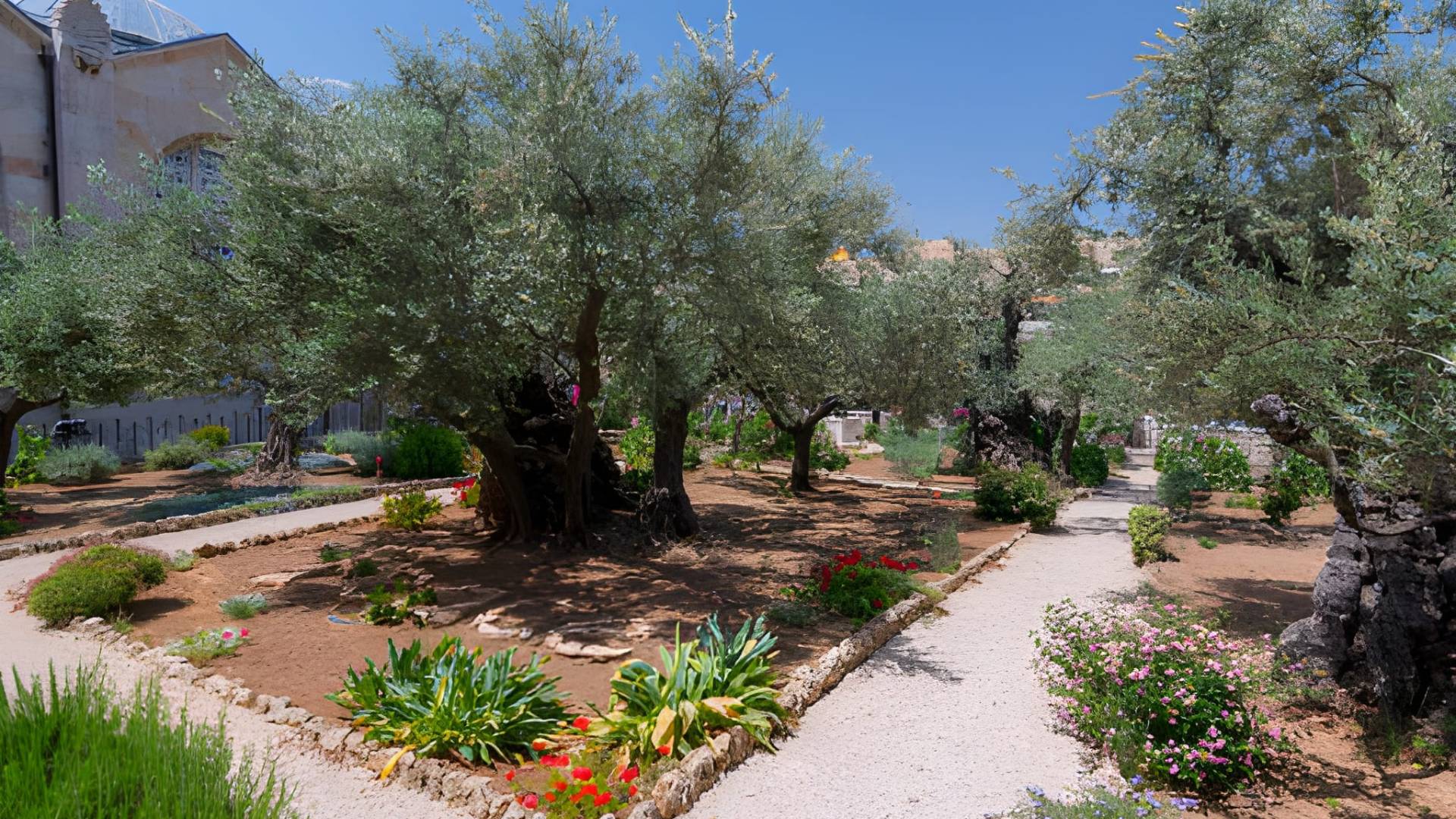
The Garden of Gethsemane is home to several ancient olive trees, some estimated to be over 2,000 years old. Their gnarled trunks and twisted branches seem to carry the memory of that holy night. Modern scientific studies have shown that these trees are among the oldest in the world, possibly descendants of those that stood during Christ’s time.
For many pilgrims, standing beneath these trees is an awe-inspiring experience—a direct connection to the moment when Jesus fell to His knees in prayer. The olive tree, long a symbol of peace and endurance, serves as a reminder that even through suffering, life and hope continue to grow.
The Church of All Nations: A Shrine of Prayer
Adjacent to the garden stands the Church of All Nations, also known as the Basilica of the Agony. Built in the early 20th century, this magnificent church houses the rock on which Jesus is believed to have prayed during His agony. The church’s interior, dimly lit with violet and blue hues, evokes the somber atmosphere of that night of betrayal and sorrow.
Twelve nations contributed to the building of the church—hence its name—symbolizing the global unity of faith that draws Christians from every corner of the world to this sacred spot. Inside, visitors kneel in silence, reflecting on the immense love of Christ, who accepted suffering to redeem humanity.
A Place of Reflection and Renewal
The Garden of Gethsemane continues to offer spiritual refuge to all who visit. Pilgrims come not only to witness history but to experience transformation. The garden invites believers to lay down their fears, to pray as Jesus prayed, and to surrender their will to God.
In this place of solitude, many find healing, peace, and renewed strength. It is a reminder that every Christian life includes a personal “Gethsemane”—a time of testing and surrender that leads to resurrection and joy.
Biblical and Theological Significance
Gethsemane reveals the full humanity of Christ—His vulnerability, emotions, and deep connection with the Father. It shows that obedience and trust are the true paths to redemption. The events that began in this garden led directly to the Passion, death, and resurrection that form the foundation of Christian faith.
This sacred place also highlights the power of prayer. In His darkest hour, Jesus turned to prayer, finding strength in communion with God. Pilgrims who walk through Gethsemane are reminded that prayer transforms pain into peace and despair into hope.
A Living Testament of Faith
Today, the Garden of Gethsemane remains one of the most visited pilgrimage sites in the Holy Land. The quiet rustle of olive leaves, the scent of the earth, and the sight of the ancient trees create an atmosphere of holiness that transcends time.
For the Christian pilgrim, to stand in Gethsemane is to stand on sacred ground—to feel the weight of divine love and the promise of redemption. It is a place where heaven and earth meet, where sorrow is turned into strength, and where the faithful are called to say with Christ: “Not my will, but Yours be done.”