
The Basilica of St. John Lateran holds a unique and unparalleled position in the Christian world as the official cathedral of the Bishop of Rome, the Pope. While many associate the heart of Catholicism with St. Peter’s Basilica, it is the Basilica of St. John Lateran that carries the profound title of “Mother and Head of all Churches of the City and the World.” Located in the ancient city of Rome, this sacred basilica stands as the oldest public church in Christianity and a powerful symbol of the Church’s historical and spiritual authority.
The origins of the Basilica of St. John Lateran date back to the early 4th century during the reign of Emperor Constantine. After Christianity was legalized, Constantine donated his Lateran palace to the Church, allowing the construction of the first grand Christian basilica. This historic act marked a turning point in world history, as Christianity emerged from persecution into public worship. The basilica was dedicated to Christ the Savior and later also honored Saint John the Baptist and Saint John the Evangelist, from whom it derives its current name.
For over a thousand years, the Basilica of St. John Lateran served as the primary residence of the popes before the papacy eventually moved to the Vatican City. During this long period, the basilica became the center of Christian governance, theology, and liturgical practice. Several important ecumenical councils were held within its walls, shaping the doctrines and disciplines of the Church that remain influential to this day.
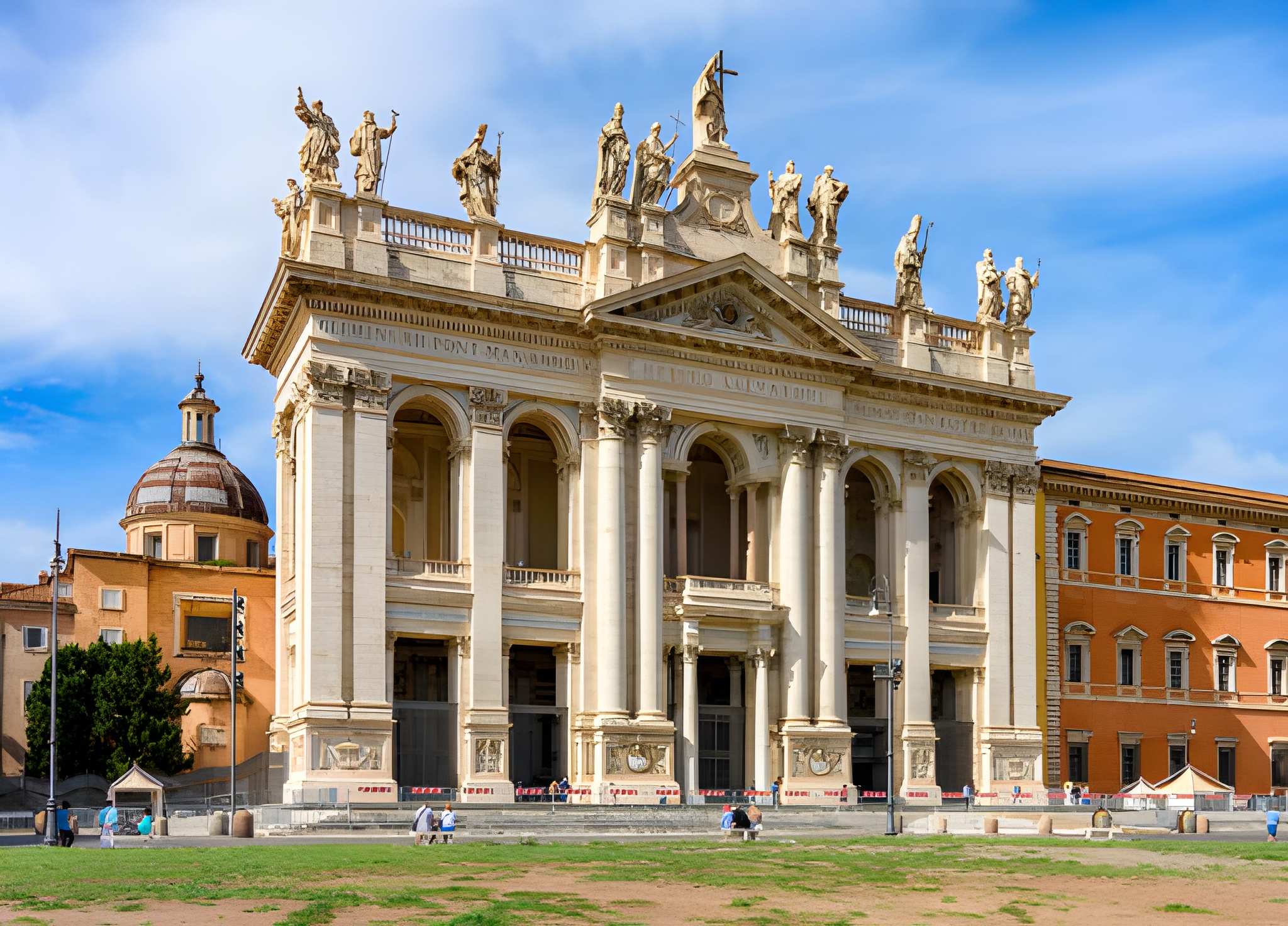
The architectural design of the Basilica of St. John Lateran reflects centuries of transformation. Though rebuilt multiple times due to earthquakes, fires, and political changes, the basilica maintains its grand spiritual presence. The current structure blends early Christian foundations with Baroque and Renaissance elements. Its majestic façade, towering statues of Christ and the apostles, and massive interior columns create an atmosphere of reverence, strength, and sacred authority.
Inside the basilica, visitors encounter one of the most impressive sacred interiors in Rome. The nave is lined with colossal statues of the twelve apostles, symbolizing the foundation of the Church upon their witness and faith. The richly decorated ceiling and marble floors reflect the artistic devotion of generations of believers. Every detail within the basilica serves as a reminder that this is not just a historic monument, but a living center of worship.
The high altar of the Basilica of St. John Lateran holds exceptional spiritual importance. It is traditionally believed to contain relics associated with the apostles Peter and Paul. Only the Pope is permitted to celebrate Mass at this altar, emphasizing the basilica’s unique status as the Pope’s cathedral. Behind the altar rises the ornate Gothic baldachin that shelters one of the most sacred spaces in Catholic tradition.
Adjacent to the basilica stands the Lateran Baptistery, one of the oldest baptisteries in the Christian world. From the earliest centuries, thousands of converts were baptized here, including many of the first Roman Christians. The baptistery symbolizes spiritual rebirth and the spread of Christianity throughout the Roman Empire. For pilgrims, it stands as a powerful reminder of their own baptismal identity and entry into the Christian faith.
Throughout history, the Basilica of St. John Lateran has been a witness to major spiritual and political transformations. From the fall of the Roman Empire to the rise of the medieval Church, from reform movements to modern times, the basilica remained a constant spiritual anchor for the Christian world. Despite periods of decline and destruction, it was always restored, reflecting the enduring strength and resilience of the Church itself.
Today, the Basilica of St. John Lateran remains one of the four major papal basilicas in Rome and a central destination for Christian pilgrims visiting the city. While many pilgrims naturally gravitate toward St. Peter’s Basilica, those who visit St. John Lateran encounter a deeper connection to the earliest institutional roots of the Church. The basilica offers a quieter yet equally profound spiritual experience, grounded in tradition and apostolic authority.
Every year on the anniversary of its dedication, celebrated on November 9, the Universal Church commemorates the Basilica of St. John Lateran. This celebration emphasizes that the basilica is not only important to Rome but represents the unity and universality of the entire Christian world. It stands as a visible sign that the Church is built upon faith, tradition, and continuity.
For modern pilgrims, visiting the Basilica of St. John Lateran is a journey into the very heart of Christian history. Walking through its ancient halls, praying before its sacred altar, and contemplating its apostolic symbolism creates a deep sense of connection between past and present. It is a place where the faith of the early Church continues to resonate powerfully in the life of today’s believers.
In conclusion, the Basilica of St. John Lateran stands as the true Mother Church of Christianity, a sacred landmark that embodies the authority, tradition, and spiritual legacy of the Catholic Church. As the cathedral of the Pope and the oldest public church in the world, it remains a living testimony to the endurance of Christian faith across centuries. Its sacred presence continues to inspire pilgrims, strengthen believers, and proclaim the timeless message of Christ to the world.