

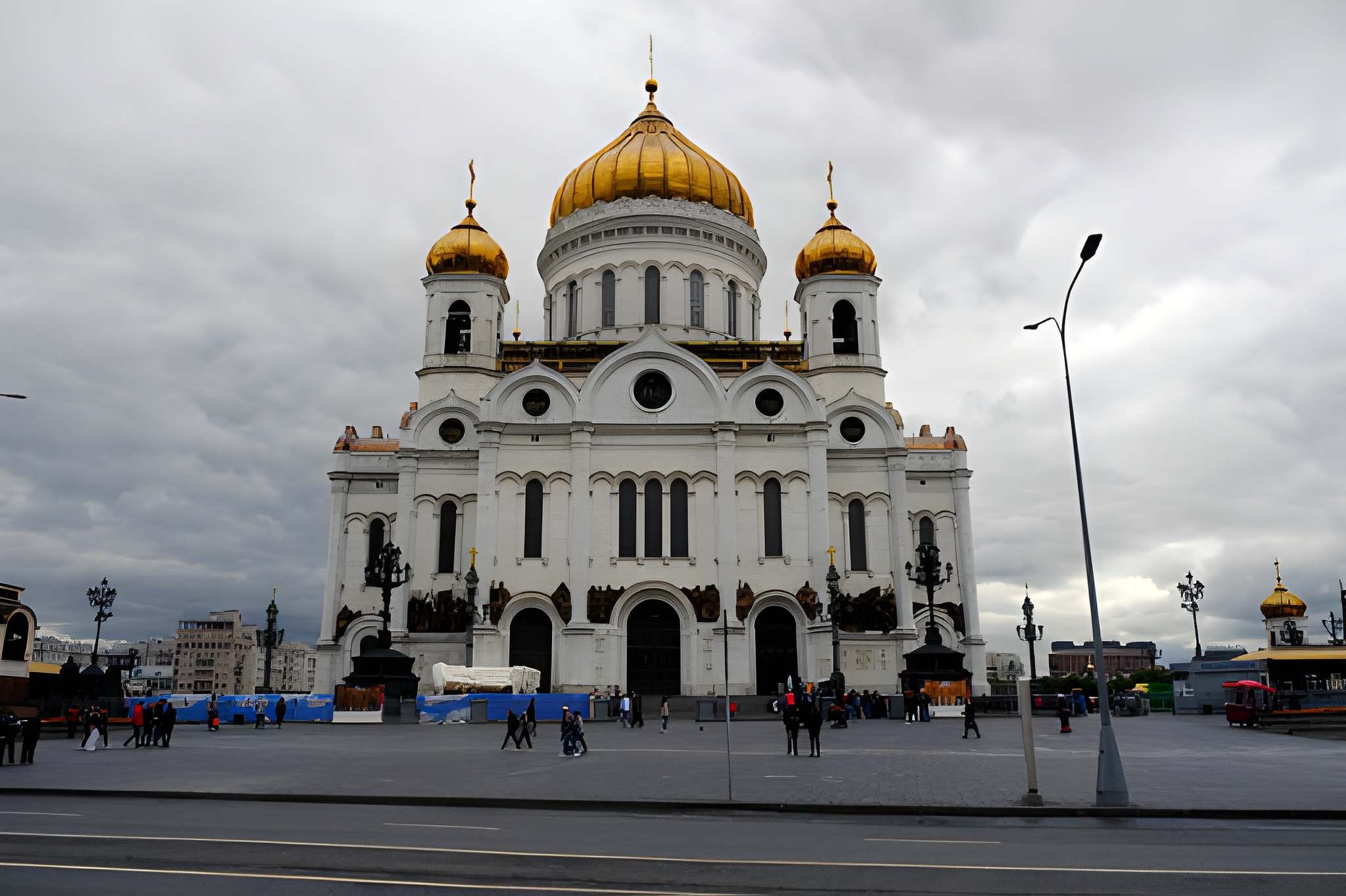
The Cathedral of Christ the Savior stands as one of the most iconic and spiritually significant Christian landmarks in Russia. Located in the heart of Moscow, this monumental cathedral serves as a symbol of Russian Orthodoxy, national faith, and architectural grandeur. With its gleaming golden domes and towering presence, the cathedral continues to inspire awe among pilgrims, tourists, and believers from around the world.
The origins of the Cathedral of Christ the Savior date back to the early 19th century, following Russia’s victory over Napoleon. Tsar Alexander I commissioned the construction of the cathedral to commemorate the deliverance of the Russian people and to honor God for granting them victory. The cathedral was envisioned as a magnificent expression of national gratitude and Christian devotion, reflecting the intertwining of faith and Russian identity.
Construction began in 1839 and continued for decades, employing some of Russia’s finest architects and artisans. The cathedral’s design combines traditional Russian Orthodox architectural elements with neoclassical influences, creating a structure that is both imposing and spiritually uplifting. The main dome rises nearly 103 meters high, crowned with a gilded cross, visible from across Moscow.
Inside the cathedral, worshippers and visitors are greeted by an atmosphere of grandeur and sanctity. The interior is adorned with intricate frescoes, gilded icons, marble floors, and chandeliers that illuminate sacred spaces. Central to the cathedral’s spiritual life is the main altar, where the Eucharist is celebrated, and the faithful gather for prayers, liturgies, and special religious ceremonies.
The Cathedral of Christ the Savior has a rich and tumultuous history. In 1931, during the Soviet era, the original cathedral was demolished to make way for a proposed Palace of the Soviets, a massive government building that was never completed. For decades, the site remained empty, symbolizing the challenges faced by the Russian Orthodox Church under communist rule. The cathedral’s destruction became a poignant reminder of faith under persecution.
After the fall of the Soviet Union, a massive reconstruction project began in the 1990s to restore the Cathedral of Christ the Savior to its former glory. Completed in 2000, the rebuilt cathedral faithfully replicates the original design while incorporating modern engineering and materials. Today, it stands as a triumphant symbol of spiritual revival, national pride, and the resilience of faith.
The cathedral is a major pilgrimage destination for Orthodox Christians, attracting believers from across Russia and beyond. Pilgrims visit to attend religious services, venerate sacred icons, and participate in liturgical celebrations, especially during major feast days such as Easter and Christmas. The cathedral’s spiritual influence extends far beyond its walls, shaping the religious life of the Russian Orthodox community.
In addition to its religious significance, the Cathedral of Christ the Savior serves as a cultural and historical landmark. It hosts concerts, educational events, and art exhibitions, highlighting the enduring connection between faith, art, and national heritage. The cathedral’s prominent location along the Moskva River makes it a focal point of Moscow’s skyline and a symbol of enduring Christian presence in the city.
Architecturally, the cathedral reflects the rich traditions of Russian ecclesiastical design, incorporating multiple domes, arched windows, and intricate ornamentation. The frescoes depict biblical scenes, saints, and theological narratives, offering worshippers both spiritual instruction and aesthetic inspiration. Every detail conveys a sense of reverence, inviting visitors to engage with the sacred and the historical simultaneously.
The Cathedral of Christ the Savior is more than an architectural marvel; it is a living testament to the faith, perseverance, and devotion of the Russian people. Its reconstruction demonstrates the enduring power of belief and the importance of preserving sacred spaces for future generations. Pilgrims often leave the cathedral with a renewed sense of spiritual purpose, inspired by centuries of devotion and resilience.
In conclusion, the Cathedral of Christ the Savior in Moscow stands as a monumental testament to Russian Orthodox Christianity, national faith, and architectural brilliance. With its rich history, awe-inspiring design, and ongoing role as a center of worship, it continues to attract pilgrims, scholars, and visitors alike. The cathedral embodies the enduring power of faith, serving as a beacon of hope, devotion, and spiritual inspiration in the heart of Russia.