

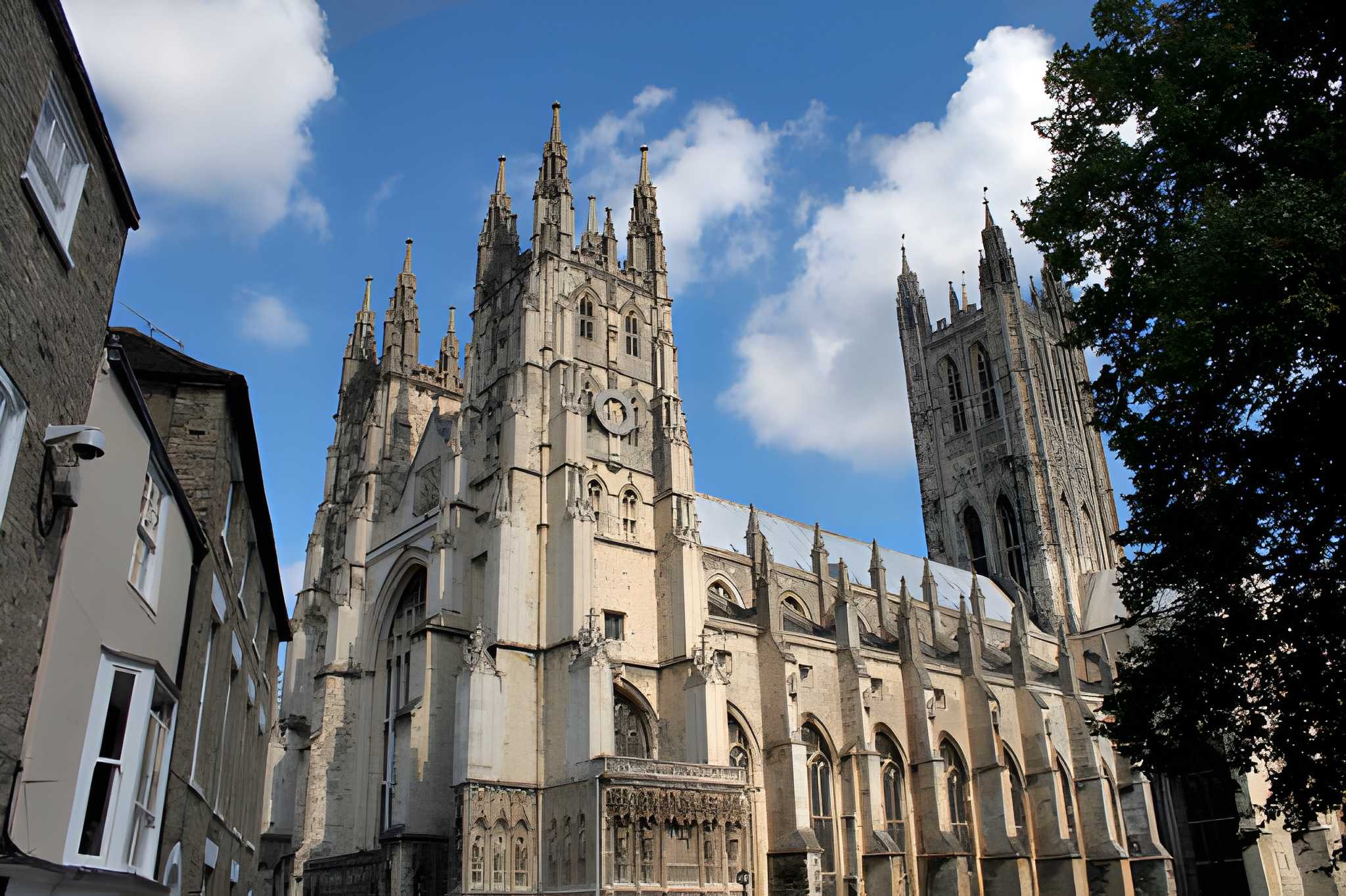
Canterbury Cathedral stands as one of the most important and influential Christian monuments in the world. Located in the historic city of Canterbury, this magnificent cathedral is the spiritual heart of the Anglican Communion and a cornerstone of Christian pilgrimage in England. For centuries, it has drawn believers, scholars, and travelers seeking faith, history, and spiritual reflection.
The origins of Canterbury Cathedral date back to 597 AD, when Saint Augustine was sent by Pope Gregory the Great to evangelize the Anglo-Saxons. Upon his arrival, Augustine established his seat in Canterbury, founding what would become the center of Christianity in England. The cathedral has since served as the seat of the Archbishop of Canterbury, the senior bishop of the Church of England and a symbolic leader of the worldwide Anglican Communion.
Throughout its long history, Canterbury Cathedral has undergone numerous reconstructions due to fires, expansions, and evolving architectural styles. The current structure reflects a blend of Romanesque and Gothic architecture, with soaring arches, intricate stonework, and expansive stained-glass windows that illuminate the interior with sacred light. Each architectural layer tells a story of faith preserved across generations.
One of the most significant events in the cathedral’s history was the martyrdom of Saint Thomas Becket in 1170. As Archbishop of Canterbury, Becket clashed with King Henry II over the rights and authority of the Church. His brutal murder inside the cathedral shocked medieval Europe and transformed Canterbury into one of the most important pilgrimage destinations in Christendom. Becket was canonized just three years later, and his shrine became a focal point of devotion.
Medieval pilgrims traveled from across Europe to venerate the shrine of Saint Thomas Becket, seeking healing, forgiveness, and spiritual renewal. These pilgrimages inspired Geoffrey Chaucer’s famous work, The Canterbury Tales, which vividly depicts the diverse travelers journeying to the cathedral. Through literature and faith, Canterbury became deeply embedded in the spiritual imagination of Christian Europe.
The cathedral’s interior reflects its sacred legacy. The high altar, the Trinity Chapel, and the site of Becket’s martyrdom offer spaces for prayer and contemplation. Stained-glass windows depict biblical stories and miracles attributed to Saint Thomas Becket, serving both as theological teaching tools and artistic treasures. These windows remain among the finest examples of medieval stained glass in England.
Canterbury Cathedral continues to play a central role in Christian worship and spiritual life. Daily services, special liturgies, and major religious celebrations are held within its walls, maintaining an unbroken tradition of prayer that spans more than fourteen centuries. The cathedral’s choral tradition is especially renowned, enriching worship through sacred music that resonates throughout the vast nave.
As a UNESCO World Heritage Site, Canterbury Cathedral is recognized for its outstanding historical, architectural, and spiritual value. Preservation efforts ensure that this sacred space remains accessible to future generations while retaining its authenticity and religious purpose. The cathedral stands not only as a monument of the past but as a living center of faith.
For modern pilgrims, Canterbury Cathedral offers a journey of spiritual reflection rooted in tradition. Walking the ancient paths once traveled by medieval pilgrims allows visitors to connect deeply with the history of Christian devotion. The cathedral’s serene atmosphere invites personal prayer, meditation, and renewal, regardless of denominational background.
The surrounding precincts, including the cloisters and chapter house, provide further insight into monastic life and ecclesiastical governance. These spaces reflect the disciplined spiritual life that shaped the Church in medieval England and continue to influence Anglican tradition today.
In conclusion, Canterbury Cathedral remains a powerful symbol of Christian pilgrimage, faith, and unity. As the spiritual center of the Anglican Communion and the site of Saint Thomas Becket’s martyrdom, it continues to inspire believers across the world. Through its sacred history, architectural beauty, and ongoing worship, Canterbury Cathedral stands as a timeless testament to Christianity’s enduring spiritual journey.