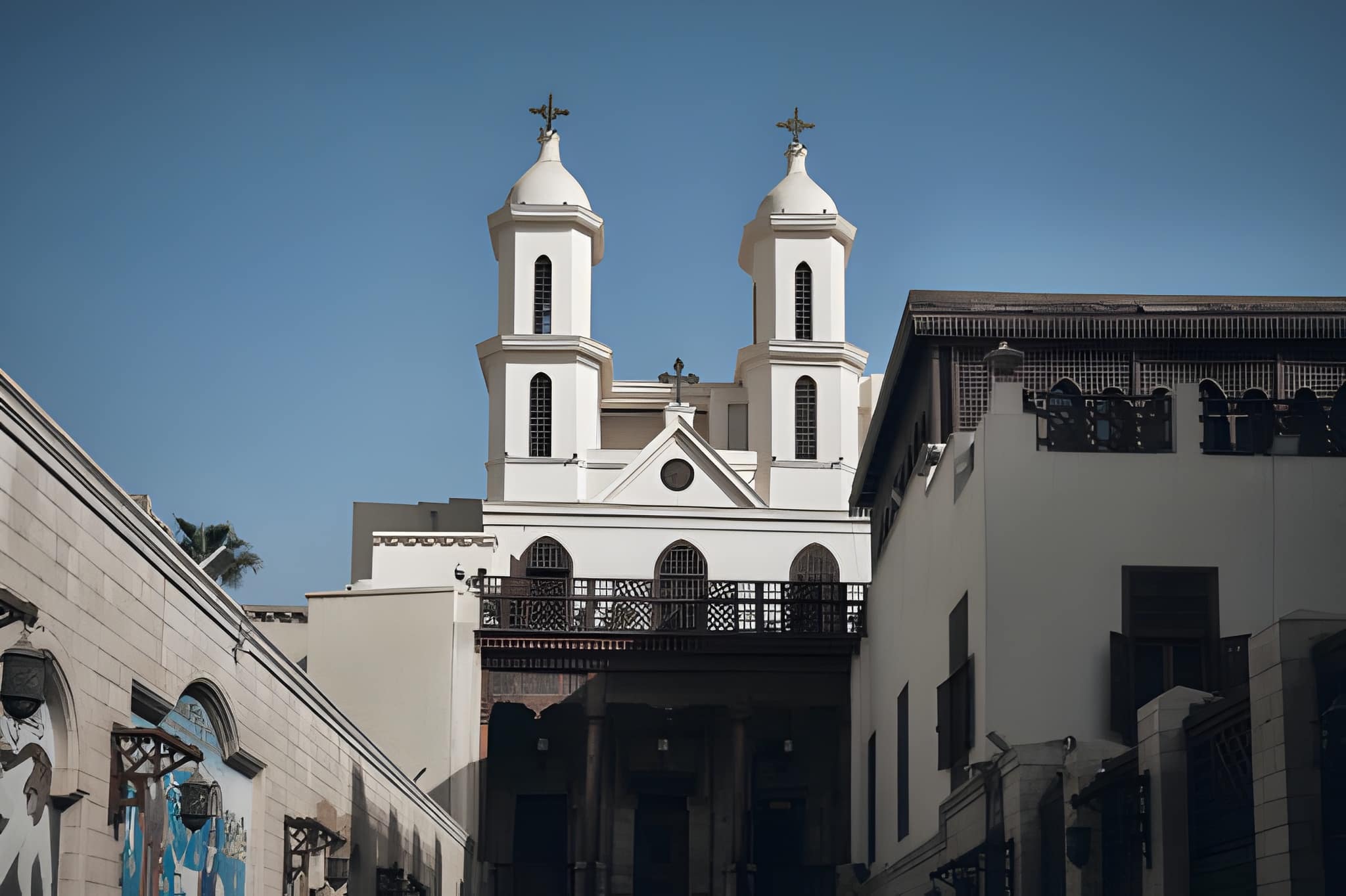
The Hanging Church, also known as the Church of the Virgin Mary, stands as one of the most iconic and historically significant Christian landmarks in Egypt. Located in the heart of Old Cairo, the church is renowned for its elevated structure, ancient origins, and central role in the spiritual life of the Coptic Orthodox community. For centuries, it has served as a place of worship, cultural heritage, and pilgrimage, making it one of the most visited Christian sites in the region.
The name “Hanging Church” comes from its unique architectural design. Built above the southern gatehouse of the Babylon Fortress, the church appears to be suspended in the air, resting on a series of wooden beams and stone arches. This elevated structure not only gives the church its distinctive name but also symbolizes its spiritual prominence within the Christian community. The church dates back to the 3rd century AD, making it one of the oldest surviving churches in Egypt.
The Hanging Church has long been considered the spiritual heart of Coptic Christianity. For centuries, it served as the official residence of the Coptic Patriarchs, who often conducted key religious ceremonies, meetings, and administrative duties within its walls. As a result, the church played a major role in shaping the development of Christian life in Egypt. Many patriarchs were elected, enthroned, and honored here, further cementing its importance in Coptic history.
Inside the Hanging Church, visitors encounter one of the finest examples of early Coptic architecture. The basilica-style interior includes a high wooden ceiling shaped like the hull of Noah’s Ark, symbolizing refuge and salvation. The nave is supported by marble columns of varying designs, some believed to have been repurposed from older structures. This diversity in architectural styles reflects the church’s long history and the many phases of restoration and expansion it has undergone.
One of the most remarkable features of the Hanging Church is its beautiful iconostasis, an intricately carved wooden screen adorned with ivory inlays. The iconostasis displays a collection of ancient icons depicting Christ, the Virgin Mary, and various saints. These icons are considered spiritual treasures, representing the deep devotion and artistic traditions of the Coptic Church. Among these icons is the famous “Coptic Last Supper,” a piece admired for its unique Egyptian artistic style.
The church also contains over 110 icons dating back to the 8th century and beyond. These icons offer visitors a visual journey into Coptic spirituality, depicting scenes from the life of Christ, the Virgin Mary, and the martyrs of the early church. Many pilgrims find these icons especially meaningful, as they help deepen their understanding of Coptic theology, history, and artistic heritage.
The Hanging Church’s location in Coptic Cairo places it within a cluster of significant religious sites, including the Coptic Museum, the Church of St. Sergius (Abu Serga), and the Synagogue of Ben Ezra. This area, rich with layers of Christian, Jewish, and Islamic heritage, highlights the cultural and religious diversity of Egypt across centuries. Pilgrims visiting the Hanging Church often explore these nearby landmarks to gain a deeper appreciation for the region’s ancient history.
Beyond its architectural and historical importance, the Hanging Church remains an active place of worship. Regular liturgies, feast celebrations, and special ceremonies draw worshippers from across Egypt and beyond. The church particularly attracts pilgrims during major Christian feasts, such as Christmas and Easter, offering them a sacred space for prayer, reflection, and spiritual renewal.
The Hanging Church has undergone numerous restoration efforts throughout its long history. Flooding from the Nile, natural aging, and structural challenges have required careful preservation to maintain its integrity. Modern restoration projects have strengthened its foundations and restored its unique features, ensuring that the church continues to stand as a beacon of faith for future generations.
Today, the Hanging Church remains a powerful symbol of the endurance of Christianity in Egypt. Its elevated position, ancient origins, and spiritual atmosphere make it an essential destination for pilgrims seeking to connect with the roots of their faith. Whether admiring its architecture, venerating its icons, or reflecting in its quiet sanctuary, visitors experience a deep sense of holiness within its walls.
In conclusion, the Hanging Church is far more than an architectural marvel—it is a living testament to the history, resilience, and spirituality of the Coptic Christian community. Its sacred presence in Old Cairo continues to inspire believers and preserve the rich heritage of Christianity in Egypt.