

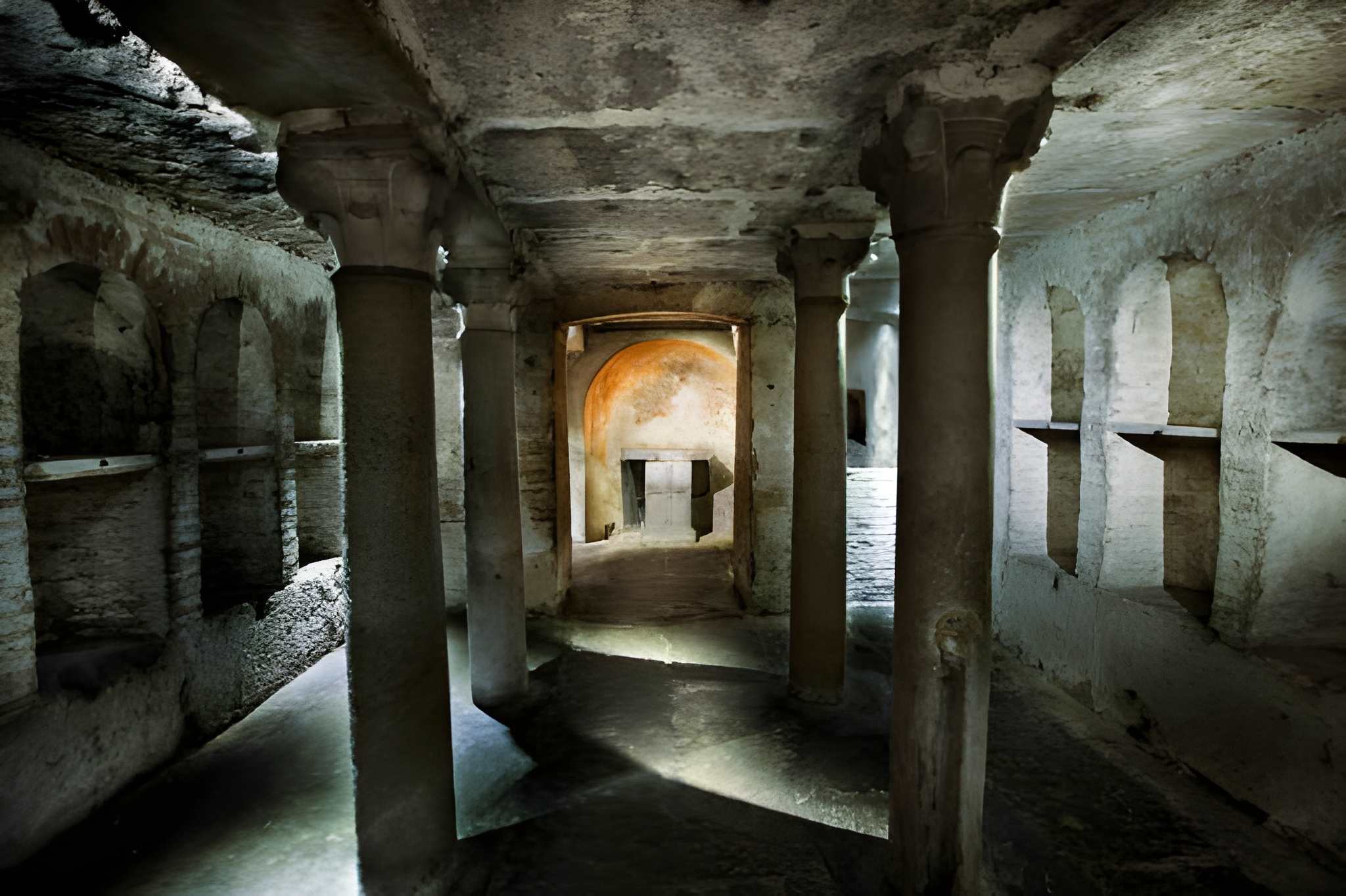
The Catacombs of Rome represent one of the most mysterious and spiritually powerful chapters in the history of Christianity. Hidden beneath the streets and outskirts of the ancient city, these underground burial tunnels served as sacred places of burial, worship, and refuge for the early Christian community during times of persecution. Today, the catacombs stand as silent witnesses to faith, sacrifice, and the unwavering devotion of the first followers of Christ.
Located around the ancient boundaries of Rome, the catacombs form an extensive network of underground corridors stretching for hundreds of kilometers. These tunnels were carved into soft volcanic rock beginning in the 2nd century AD and were used primarily as burial places until the 5th century. While pagans also used underground tombs, the Christian catacombs became uniquely significant because of their deep spiritual symbolism and connection to martyrdom and resurrection.
For the early Christians, burial was not simply a final resting place but a declaration of hope in eternal life. Unlike pagan cremation practices, Christians buried their dead in anticipation of the resurrection of the body. The catacombs reflect this belief through inscriptions, symbols, and artwork that emphasize salvation, victory over death, and the promise of heaven. Common symbols found in the tunnels include the fish, the anchor, the Good Shepherd, and the dove, each representing core elements of Christian faith.
One of the most important aspects of the Catacombs of Rome is their connection to the age of persecution. During the first three centuries of Christianity, believers were often oppressed by Roman authorities. Many Christians were imprisoned, tortured, and executed for their faith. The catacombs became sacred burial grounds for martyrs who died defending their belief in Christ. These martyrs were later venerated as saints, and their tombs became powerful pilgrimage sites.
Among the most famous catacombs are those associated with early Christian saints and church leaders. The Catacomb of San Callisto, for example, contains the burial sites of several early popes and numerous martyrs. Another well-known site is the Catacomb of San Sebastiano, named after the Christian martyr Saint Sebastian. These sacred underground spaces preserve the memory of those who laid the foundation of the Church through their suffering and devotion.
The walls of the catacombs are decorated with some of the earliest examples of Christian art. These frescoes offer a unique window into the theological beliefs of the early Church. Scenes from the Old and New Testaments appear throughout the tunnels, including Noah’s Ark, Jonah and the whale, the Good Shepherd, Daniel in the lions’ den, and the resurrection of Lazarus. These images were not merely decorative but served as visual expressions of faith, hope, and God’s saving power.
The catacombs were not secret hiding places for regular worship as is sometimes imagined, but they did serve as locations for memorial services, prayers for the dead, and commemorations of martyrs. On anniversaries of martyrdom, Christians gathered in these underground chambers to celebrate the Eucharist and honor the faithful who had given their lives for Christ. This practice strengthened the unity of the Church during times of trial and fear.
With the legalization of Christianity in the 4th century under Emperor Constantine, the use of the catacombs gradually declined. Public churches were built across Rome, and believers no longer needed to rely on underground burial sites. However, the spiritual importance of the catacombs did not disappear. Pilgrims continued to visit the tombs of martyrs and saints, and many of these sites were carefully preserved by the Church.
During the Middle Ages, some sections of the catacombs were forgotten due to political changes, invasions, and the growth of the city above them. It was not until the Renaissance and later archaeological explorations that many of these underground tunnels were rediscovered. Modern excavations revealed thousands of tombs, inscriptions, and artworks, confirming the historical reliability of early Christian tradition and providing priceless insight into the life of the first believers.
Today, the Catacombs of Rome are among the most important Christian pilgrimage destinations in Italy. Thousands of visitors each year descend into these sacred tunnels to walk in the footsteps of the early Church. Guided tours offer pilgrims the opportunity to see ancient tombs, chapels, and frescoes while learning about the courage, faith, and sacrifices of early Christians. The quiet atmosphere, dimly lit corridors, and ancient symbols create a deeply moving spiritual experience.
For modern believers, visiting the catacombs is not only a historical journey but also a spiritual encounter. The faith of the early Christians, who chose loyalty to Christ over comfort and safety, continues to inspire courage and devotion today. The catacombs remind the Church that its foundation was built not on power or wealth, but on faith, prayer, and the testimony of martyrs.
In conclusion, the Catacombs of Rome stand as one of the most powerful and authentic testimonies to the origins of Christian faith. Hidden beneath the ancient city, these sacred tunnels preserve the memory of persecution, hope, resurrection, and unwavering belief. They remain a profound pilgrimage destination for Christians seeking to connect with the earliest roots of their faith and to honor the spiritual legacy of the Church’s first witnesses.