
St. Peter’s Basilica stands as one of the most sacred, influential, and recognizable Christian sites in the world. Located in the heart of Vatican City, this magnificent basilica is the spiritual center of the Catholic Church and a powerful symbol of Christian unity. Built over the traditional burial site of Saint Peter, the church holds profound meaning for millions of believers who journey from across the globe to experience its sacred presence.
The origins of St. Peter’s Basilica trace back to the early days of Christianity. According to Christian tradition, Saint Peter, one of the twelve apostles of Jesus and the first leader of the early Church, was martyred in Rome during the persecution under Emperor Nero. He was buried on Vatican Hill, where early Christians later built a small shrine to honor his sacrifice. In the 4th century, Emperor Constantine ordered the construction of the first basilica over Peter’s tomb, establishing the site as a major center of Christian pilgrimage.
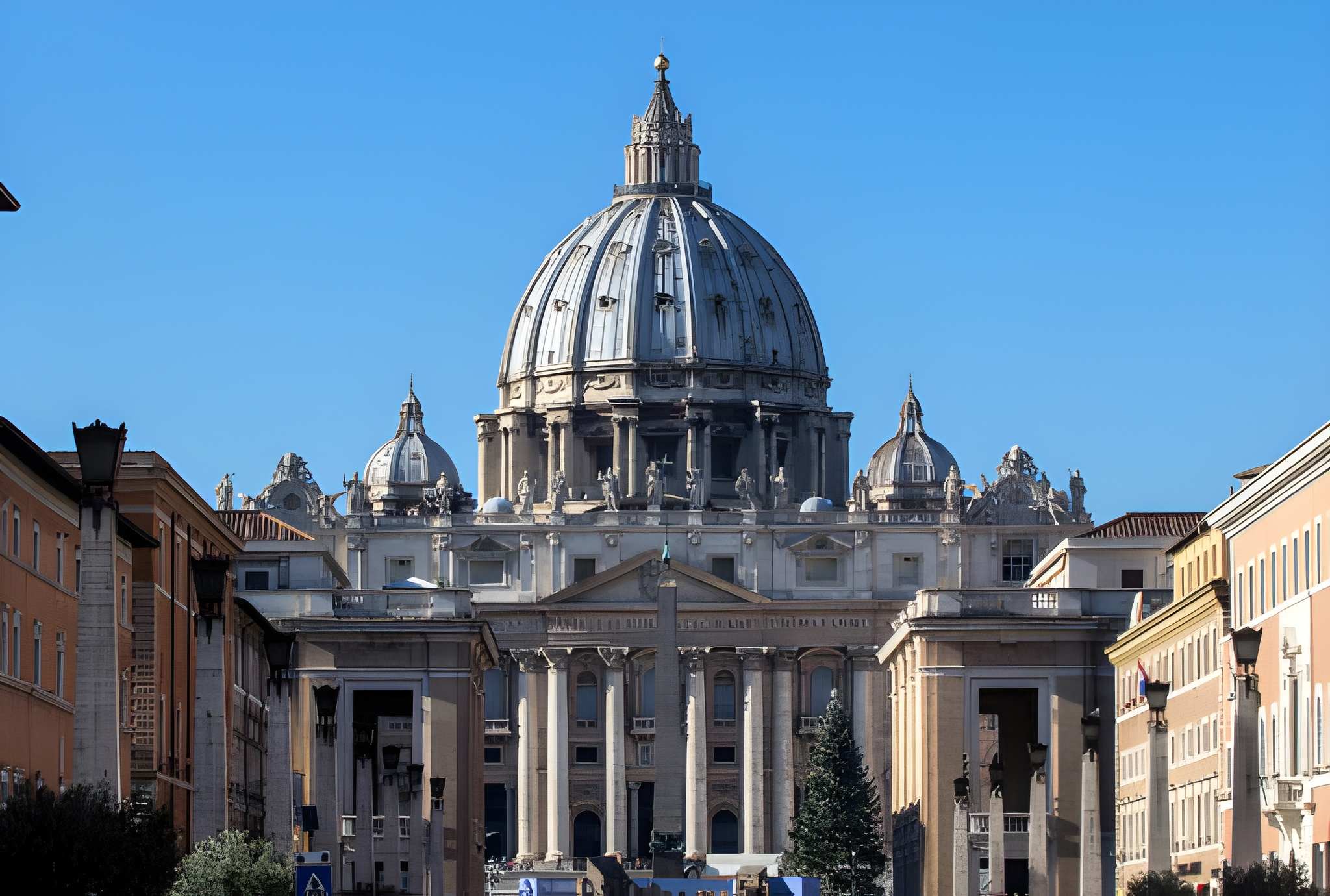
The current structure of St. Peter’s Basilica is the result of one of the most ambitious architectural projects in history. Construction began in the early 16th century and continued for more than 120 years. Some of the greatest artists and architects of the Renaissance contributed to its design, including Michelangelo, whose iconic dome dominates the skyline of Rome. The basilica was consecrated in 1626, becoming the largest church in the world and a masterpiece of Christian architecture.
The exterior of St. Peter’s Basilica reflects both grandeur and spiritual symbolism. Its vast façade welcomes pilgrims into a sacred space designed to inspire awe and reverence. From the great square in front of the basilica, St. Peter’s Square embraces visitors with its sweeping colonnades, symbolizing the arms of the Church reaching out to the faithful. Every year, this square hosts major Christian celebrations, including Easter and Christmas, led by the Pope.
Inside St. Peter’s Basilica, visitors encounter one of the richest collections of Christian art and sacred architecture in the world. The interior is vast yet harmonious, filled with marble, gold, mosaics, and towering columns. One of the most revered masterpieces inside is Michelangelo’s Pietà, a stunning sculpture depicting the Virgin Mary holding the body of Christ after the Crucifixion. This work is admired not only for its artistic perfection but also for the deep spiritual emotion it conveys.
At the heart of the basilica stands the main altar, located directly above the tomb of Saint Peter. This sacred connection gives the basilica its unparalleled spiritual importance. Beneath the altar lies the Vatican Grottoes, where the tombs of many popes and saints are located. Pilgrims often descend into this underground area to pray near the resting place of the Apostle Peter, making it one of the most spiritually powerful moments of their visit.
The massive dome of St. Peter’s Basilica is one of its most defining features. Rising high above the church, it symbolizes the heavens and the divine presence over the Church. Visitors who climb to the top are rewarded with breathtaking views of Vatican City and the city of Rome beyond. The ascent itself is seen by many pilgrims as a symbolic spiritual journey upward toward God.
St. Peter’s Basilica is not only a historical and architectural landmark; it is a living center of Christian faith. Daily Masses, papal ceremonies, and international gatherings take place within its walls. It is the focal point of the Catholic world, where the Pope leads major liturgies and delivers messages of faith, peace, and unity to millions of believers worldwide.
Pilgrimage to St. Peter’s Basilica is a lifelong spiritual goal for many Christians. Visitors arrive with prayers, gratitude, repentance, and hope. Some come seeking healing, others seeking deeper faith, and many simply desire to stand at the heart of Christianity. The experience of walking through the basilica, touching its ancient stones, and praying near Saint Peter’s tomb leaves a lasting spiritual impact on all who visit.
Beyond its spiritual function, St. Peter’s Basilica also represents centuries of Christian perseverance, artistic devotion, and theological heritage. It embodies the story of the Church itself, from the martyrdom of the apostles to the global Christian community of today. Its walls carry the prayers of countless generations, making it not just a building, but a living testimony of faith.
In conclusion, St. Peter’s Basilica stands as the spiritual heart of the Christian world and a monumental symbol of faith, sacrifice, and divine devotion. As the resting place of Saint Peter and the center of the Catholic Church, it continues to guide, inspire, and unite believers across nations and cultures. Its sacred presence, artistic beauty, and deep historical roots make it one of the most important Christian pilgrimage destinations on earth.