
The Mount of Olives, rising east of Jerusalem’s Old City, is one of the most revered sites in Christianity. Steeped in biblical history and spiritual meaning, it is the place where Jesus often withdrew to pray, taught His disciples, wept over Jerusalem, and ultimately ascended into heaven. For countless Christian pilgrims, the Mount of Olives represents a journey of faith, hope, and divine revelation.
From its summit, the Mount offers breathtaking views of Jerusalem, the Kidron Valley, and the golden Dome of the Rock. Yet beyond its beauty lies profound spiritual symbolism. It stands as a bridge between heaven and earth—a place of communion, prophecy, and eternal promise.
A Mountain Rich in Biblical History
The Mount of Olives is mentioned numerous times in both the Old and New Testaments. In the Old Testament, it served as a site of refuge and prophecy. King David fled over this hill during his son Absalom’s rebellion (2 Samuel 15:30), and the prophet Zechariah foretold that the Lord would one day stand upon it in glory (Zechariah 14:4).
In the New Testament, the Mount becomes an intimate part of Jesus’ ministry. It was here that He delivered powerful teachings, lamented the coming destruction of Jerusalem, and prayed fervently before His Passion. Each of these moments reveals the Mount of Olives as a sacred stage where divine truth unfolds.
The Mount of Olives in the Life of Jesus
Throughout the Gospels, Jesus visited the Mount of Olives frequently, especially during His final week before the crucifixion.
1. A Place of Prayer and Solitude
Jesus often withdrew to the Mount of Olives to pray, seeking communion with His Father in moments of quiet reflection. The nearby Garden of Gethsemane, at the base of the Mount, is where He experienced His deepest agony and surrender before His arrest.
2. The Triumphal Entry into Jerusalem
From the Mount of Olives, Jesus began His triumphal entry into Jerusalem on Palm Sunday. Riding a donkey, He fulfilled the prophecy of Zechariah 9:9, as crowds waved palm branches and shouted, “Hosanna!” The path of this procession is still retraced by pilgrims each year during Holy Week.
3. The Olivet Discourse: Prophecy and Revelation
One of Jesus’ most significant teachings took place on this mountain. Known as the Olivet Discourse (Matthew 24–25), it contains prophecies about the end times, the destruction of the Temple, and the coming of the Kingdom of God. These teachings continue to inspire reflection on vigilance, faith, and hope.
4. The Ascension into Heaven
After His resurrection, Jesus led His disciples back to the Mount of Olives, near Bethany. From there, He ascended into heaven, blessing them and promising to send the Holy Spirit. This moment of divine glory marks the Mount of Olives as a place of ultimate victory and promise of Christ’s return.
Sacred Sites on the Mount of Olives
Pilgrims visiting the Mount encounter a landscape dotted with sacred churches and biblical landmarks.
-
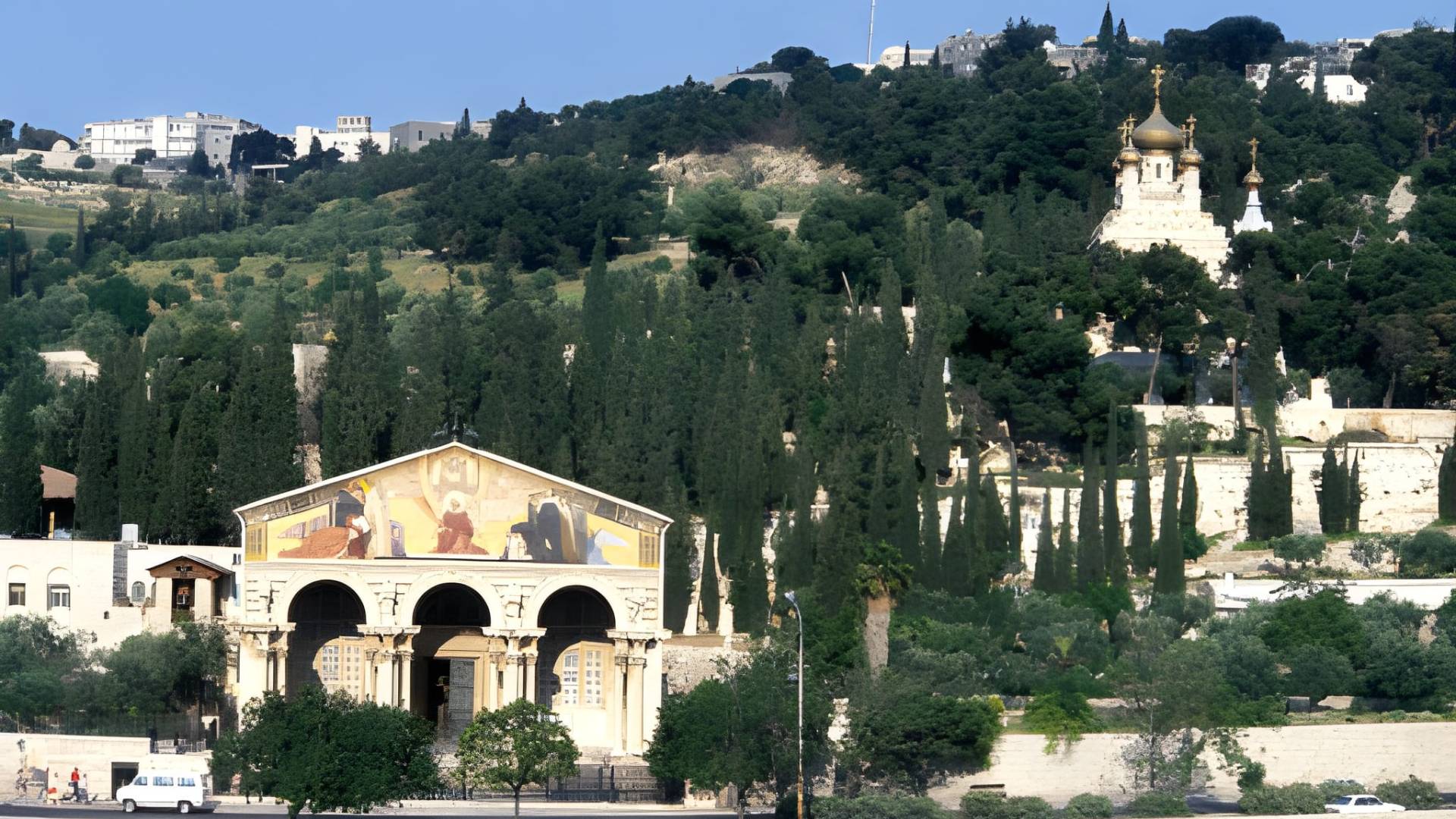
The Church of All Nations (Basilica of the Agony): Located at the foot of the Mount, this church enshrines the rock where Jesus prayed in Gethsemane.
-
The Church of Dominus Flevit: Built on the spot where Jesus wept over Jerusalem, it offers a stunning view of the Old City through its teardrop-shaped window.
-
The Chapel of the Ascension: This small, ancient shrine marks the traditional site where Jesus ascended to heaven.
-
The Tombs of the Prophets: Believed to contain the graves of Haggai, Zechariah, and Malachi, linking Old and New Testament faith.
-
The Jewish Cemetery: One of the oldest in the world, it holds deep eschatological importance, believed to be the place where resurrection will begin when the Messiah returns.
The Mount as a Symbol of Hope and Resurrection
The Mount of Olives holds profound theological meaning for Christians. It represents not only Christ’s suffering and ascension but also the hope of His second coming. The words of the angels to the disciples at the Ascension still echo through time: “This same Jesus, who has been taken from you into heaven, will come back in the same way you have seen Him go.” (Acts 1:11)
This promise makes the Mount a symbol of enduring hope—a reminder that God’s plan is not finished and that faith will one day be fulfilled in glory.
A Pilgrim’s Experience on the Mount of Olives
For pilgrims, walking the slopes of the Mount of Olives is a deeply moving experience. The journey begins in quiet prayer at the Garden of Gethsemane, continues upward through ancient olive groves, and culminates in a panoramic view of Jerusalem—the city of peace and prophecy.
Each step connects the believer to the story of salvation, from Christ’s tears to His triumph. The air is filled with reverence, and many describe the Mount as a place where heaven feels tangibly near.
A Living Testament of Faith
The Mount of Olives continues to draw millions of Christian pilgrims each year. It embodies the entire arc of the Gospel—sorrow, prophecy, prayer, resurrection, and ascension. It stands as a silent witness to God’s promises and Christ’s eternal reign.
To stand on this sacred hill is to stand in the heart of salvation history—to remember that faith, though tested, always leads to glory. The Mount of Olives is not only a geographical landmark but a spiritual summit that calls every believer to prayer, perseverance, and hope in the risen Lord.