
The Church of the Savior on Spilled Blood stands as one of the most striking and spiritually significant churches in Russia. Located in the historic heart of St. Petersburg, this remarkable Russian Orthodox church is renowned for its vibrant domes, intricate mosaics, and profound historical meaning. It is not only a place of worship but also a powerful symbol of faith, sacrifice, and national memory.
The church was built on the exact site where Emperor Alexander II was assassinated in 1881. The name “Savior on Spilled Blood” refers directly to the blood shed by the tsar, who was known as the “Liberator” for his reforms, including the emancipation of the serfs. His death deeply affected the Russian people, and the construction of this church was commissioned by his son, Alexander III, as an act of remembrance and devotion.
Construction began in 1883 and continued for over two decades, finally being completed in 1907. Unlike many buildings in St. Petersburg that reflect European architectural styles, the Church of the Savior on Spilled Blood deliberately revived traditional Russian Orthodox design. Its appearance echoes medieval Russian churches, particularly those of Moscow and Yaroslavl, emphasizing a return to national religious identity.
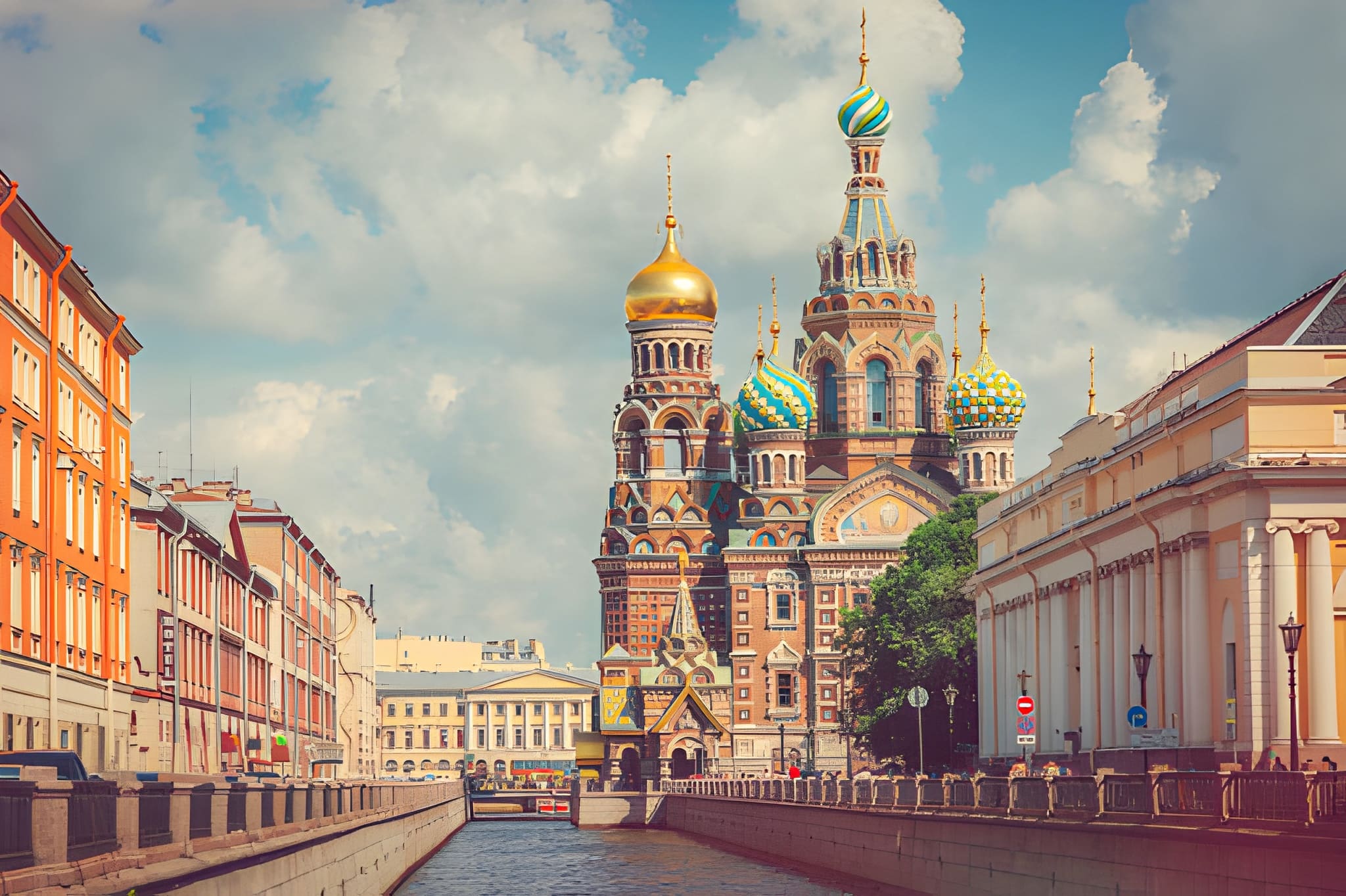
The exterior of the church is instantly recognizable by its colorful onion domes, ornate brickwork, and decorative mosaics. Each dome is crowned with a cross and richly patterned with enamel and gold, symbolizing the glory of heaven and the triumph of faith. The structure’s vertical lines draw the eyes upward, inviting contemplation of the divine.
Inside, the Church of the Savior on Spilled Blood houses one of the largest collections of mosaics in the world. Covering more than 7,000 square meters, these mosaics depict biblical scenes, saints, and events from the life of Christ. Created by some of the finest Russian artists of the time, the mosaics transform the interior into a luminous narrative of salvation history.
At the heart of the church lies the preserved site of Alexander II’s assassination. The section of pavement where the emperor was fatally wounded has been incorporated into the church’s interior, protected beneath a canopy of precious stones and columns. This sacred memorial connects worshippers directly to the historical event and reinforces the church’s role as a place of remembrance and prayer.
Spiritually, the Church of the Savior on Spilled Blood holds deep meaning for Orthodox Christians. It serves as a reminder of suffering, redemption, and the belief that faith can emerge stronger through sacrifice. Pilgrims often visit the church to pray for peace, forgiveness, and healing, drawn by the site’s solemn history and spiritual atmosphere.
During the Soviet era, the church faced neglect and damage. It was closed to worship and repurposed for various uses, including storage. Despite these challenges, the structure survived, and extensive restoration efforts in the late 20th century returned it to its former splendor. The church reopened as a museum and cultural monument, preserving its artistic and spiritual heritage.
Today, the Church of the Savior on Spilled Blood stands as one of St. Petersburg’s most visited landmarks. While it functions primarily as a museum, its sacred character remains evident in its design and atmosphere. Visitors from around the world come to admire its beauty, learn about its history, and experience its unique blend of art, faith, and memory.
The church’s location along the Griboedov Canal adds to its visual impact, reflecting its domes in the water and enhancing its sense of timelessness. Surrounded by the city’s classical architecture, it stands apart as a bold expression of Russian Orthodox spirituality and national identity.
In conclusion, the Church of the Savior on Spilled Blood is far more than an architectural masterpiece. It is a profound testament to faith shaped by history, sacrifice, and devotion. Through its mosaics, memorials, and sacred symbolism, the church continues to speak to pilgrims and visitors alike, offering a powerful reminder of Christianity’s enduring message of redemption and hope.